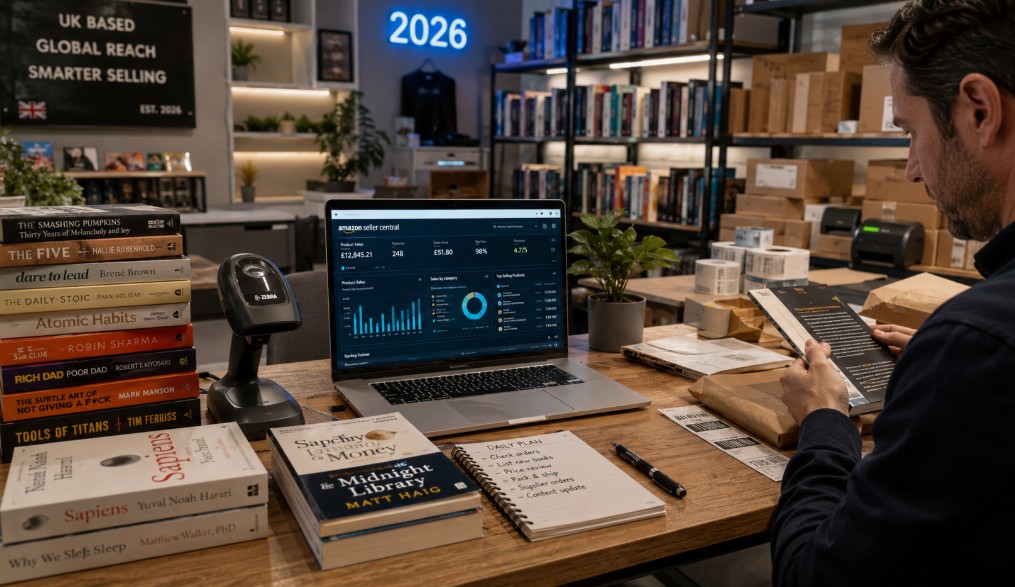

Selling books on Amazon in 2026 is still a profitable opportunity for UK sellers, but success now depends on choosing the right books, understanding Amazon fees, and using the correct fulfilment strategy.
Whether you want to sell used books, textbooks, collectibles, or self-published titles, Amazon gives you access to millions of buyers worldwide.
However, increasing competition means sellers must focus on profitable niches and accurate listings rather than simply listing large quantities of books.
Key things to know before starting:
- Choose between Individual or Professional seller plans
- Understand Amazon FBA and FBM fulfilment options
- Learn how Amazon fees affect profits
- Source books strategically for better margins
- Follow Amazon’s listing and condition guidelines
- Focus on niche and higher-value book categories
In this article, you’ll learn exactly how to sell books on Amazon in 2026, including the latest rules, common mistakes, and realistic profit expectations for UK sellers.
How Does Selling Books on Amazon Work in 2026?
Selling books on Amazon works through Amazon Seller Central, where you create a seller account, list books for sale, and fulfil customer orders either yourself or through Amazon’s fulfilment network.
Amazon continues to dominate the online book market, making it attractive for both casual sellers and full-time ecommerce businesses.
There are now two major ways people sell books on Amazon:
| Selling Method | Best For | Main Benefit |
| Amazon Seller Central | Used books, textbooks, retail arbitrage | Access to Amazon marketplace buyers |
| Kindle Direct Publishing (KDP) | Authors and publishers | Self-publishing with royalties |
| Amazon FBA | High-volume sellers | Prime shipping and automated fulfilment |
For most beginners in the UK, selling used physical books through Seller Central is the easiest starting point. You simply list books using their ISBN, set a price, and ship them after a sale.
According to industry research, online book sales continue to grow steadily due to convenience, wider availability, and increasing demand for second-hand books.
“Books remain one of the strongest evergreen product categories in ecommerce because readers continuously search for affordable and niche titles online.” — UK Ecommerce Retail Analyst
Understanding the marketplace structure before investing money is essential because Amazon is highly competitive in 2026.
Why Are More People Selling Books on Amazon UK?
Many UK sellers are entering the Amazon books market because startup costs are relatively low compared to other ecommerce businesses. Some sellers begin by clearing out old books at home, while others build large-scale resale businesses.
Another reason is the growing demand for second-hand and collectible books. Buyers increasingly look for cheaper alternatives to new retail prices, particularly for university textbooks, business books, and out-of-print editions.
Unlike launching a standalone online bookstore, Amazon already provides:
- Massive customer traffic
- Built-in payment processing
- International reach
- Trust and buyer confidence
- Logistics support through FBA
This removes many barriers that small businesses normally face.
However, profitability depends heavily on selecting the right inventory. A common mistake new sellers make is listing low-value books that cannot cover Amazon fees and shipping costs.
What Do You Need Before You Start Selling Books on Amazon?

Before opening an Amazon seller account, you need to prepare basic business and verification information. Amazon has tightened seller verification rules significantly in 2026 to reduce counterfeit products and fraud.
Amazon Seller Account Requirements in the UK
You typically need:
- Government-issued ID
- UK bank account
- Debit or credit card
- Phone number
- Tax information or UTR number
- Business address
Amazon may also request live identity verification during the registration process.
Individual vs Professional Selling Plan
Amazon offers two main account types depending on how many books you expect to sell each month.
| Selling Plan | Monthly Fee | Best For |
| Individual | No monthly fee | Casual or beginner sellers |
| Professional | Monthly subscription | High-volume sellers |
The Individual plan is ideal if you sell fewer than 35–40 books monthly. Professional plans become more cost-effective for larger inventories because they include bulk listing tools and advertising features.
Important Documents and Verification Checks
New sellers are often surprised by Amazon’s strict onboarding process. Some users report needing identity video calls, additional tax verification, and proof of address before receiving approval.
One Reddit seller explained their frustration by saying:
“The signup process felt endless, and I still struggled to understand how the fees worked afterwards.”
This highlights why understanding Amazon’s fee structure before listing products is extremely important. Many beginners rush into selling without properly calculating costs, which can quickly reduce profitability.
Once your account is fully approved, you can begin sourcing books, creating listings, and deciding how you want to fulfil customer orders.
Which Types of Books Can You Sell on Amazon Successfully?
Amazon allows sellers to list a huge variety of book categories, making it one of the most flexible ecommerce marketplaces for booksellers. However, not every category performs equally well in terms of profitability and competition.
Popular book categories include:
- Fiction and non-fiction
- University textbooks
- Rare and collectible books
- Children’s books
- Graphic novels
- Comic books
- Religious books
- Business books
- Self-published titles
Some categories perform significantly better than others. Educational books, niche non-fiction, and out-of-print editions often provide higher profit margins compared to common paperback fiction.
Books with low demand or excessive competition usually struggle to sell profitably. This is particularly true for mass-market novels that thousands of sellers already list at extremely low prices.
A successful strategy in 2026 is focusing on specialised inventory rather than trying to compete with large-volume sellers.
Where Can You Source Profitable Books to Sell on Amazon?
Finding profitable inventory is one of the biggest challenges for new booksellers. Successful Amazon sellers constantly research sourcing opportunities to maintain healthy margins and avoid wasting money on books with poor resale value.
The key is buying books cheaply enough that Amazon fees, shipping expenses, and potential returns still leave room for profit.
Best Places to Find Cheap Used Books
Many UK booksellers source inventory from:
- Charity shops
- Car boot sales
- Library clearances
- Estate sales
- Facebook Marketplace
- eBay bulk lots
- Local auctions
These sourcing methods often allow sellers to purchase books for a fraction of their resale value. Charity shops and library sales remain especially popular because they frequently rotate stock and offer books at very low prices.
Some experienced sellers also build relationships with local bookstores, schools, or libraries to gain access to bulk inventory before it becomes publicly available
Book Arbitrage and Bulk Buying Explained
Book arbitrage involves buying undervalued books from one marketplace and reselling them on Amazon for profit. Some experienced sellers scan hundreds of books using the Amazon Seller app to identify profitable opportunities.
One seller described how they earned significant profits from obscure titles:
“My most lucrative sale was an out-of-print genealogy book that made around £350 profit after seven months.”
Realistically, however, not every book becomes profitable. Many sellers eventually learn that scanning and researching inventory carefully is more important than buying books in large quantities.
Table of profitable book categories:
| Book Category | Profit Potential | Competition Level |
| University Textbooks | High | Medium |
| Rare Collectibles | Very High | Low |
| Business & Finance | Medium | Medium |
| Popular Fiction | Low | Very High |
| Children’s Educational Books | Medium | Medium |
Careful sourcing remains one of the biggest factors separating profitable sellers from unsuccessful ones.
How Do You List Books on Amazon Correctly?
Creating accurate listings improves visibility, buyer trust, and long-term account health. Since Amazon already has catalogue pages for most books, sellers normally add their offer to an existing listing rather than creating a completely new product page.
Accurate listings also reduce customer complaints, negative feedback, and returns, all of which can affect seller performance metrics.
Using ISBN, ASIN and SKU for Listings
Three identification numbers are especially important when selling books on Amazon:
- ISBN: Global book identifier
- ASIN: Amazon’s internal catalogue number
- SKU: Your own inventory tracking number
Using ISBNs correctly ensures your book appears under the correct catalogue entry and helps buyers find the exact edition they want. This is particularly important when selling textbooks, collector editions, or books with multiple print versions.
Book Condition Guidelines You Must Follow
Condition grading is extremely important on Amazon because buyers expect accurate descriptions before purchasing used books.
| Condition | Description |
| Like New | Minimal wear, clean pages |
| Very Good | Minor cosmetic damage |
| Good | Visible wear but readable |
| Acceptable | Significant wear but complete |
Books with missing pages, severe water damage, mould, or counterfeit copies violate Amazon policies and can lead to account penalties or listing removals.
Sellers should always inspect books carefully before listing them, especially older or second-hand copies.
Writing Accurate Product Descriptions
Descriptions should clearly explain:
- Book condition
- Missing supplements or CDs
- Writing or highlighting
- Cover damage
- Edition details
One common reason sellers receive negative feedback is overstating a book’s condition. Transparency helps build customer trust and reduces the likelihood of disputes or returns.
“Accurate condition grading is one of the biggest factors affecting customer satisfaction in the used books category.” — Amazon Marketplace Consultant
Once your listings are properly optimised, the next major decision involves choosing the right fulfilment method for your business.
How Much Does Amazon Charge to Sell Books in 2026?

In 2026, selling books on Amazon UK usually involves several fees, so sellers need to calculate costs carefully before listing inventory.
For books, Amazon typically charges a 15% referral fee on the total sale price, or around 15.3% including digital services tax.
There is also a £0.50 closing fee per book sold. Sellers must choose between an Individual selling plan, which costs £0.75 per unit sold, or a Professional selling plan, which costs £25 per month excluding VAT.
Key Amazon Book Selling Fees in the UK:
| Fee Type | Estimated Cost |
| Referral fee for books | Around 15% |
| Digital services tax impact | Around 15.3% total |
| Closing fee | £0.50 per book sold |
| Individual selling plan | £0.75 per unit sold |
| Professional selling plan | £25/month excl. VAT |
| FBA fulfilment fees | Based on book size and weight |
| Storage fees | Monthly warehouse cost |
If you use Fulfilment by Amazon, extra costs may apply for storage, shipping, returns processing, and long-term inventory. FBA fees vary depending on the book’s size, weight, and fulfilment method.
For this reason, many experienced sellers avoid listing low-value books unless they can buy them very cheaply. Books priced under £8-£10 may leave little profit after Amazon fees, postage, storage, and returns.
If you are self-publishing through Amazon KDP, the cost structure is different. Paperback royalties are usually based on the list price minus printing costs, so authors should calculate profit separately from normal marketplace selling fees.
Should You Choose Amazon FBA or FBM for Selling Books?
Choosing between FBA and FBM depends on your budget, inventory size, and business goals.
Fulfilled by Amazon (FBA) means Amazon stores and ships your books. Merchant Fulfilled Network (FBM) means you handle storage and shipping yourself.
FBA advantages:
- Prime eligibility
- Faster shipping
- Higher customer trust
- Less daily handling
FBM advantages:
- Lower fulfilment costs
- More inventory control
- Better for slow-moving books
Many successful sellers use a hybrid model.
A useful strategy in 2026 is sending fast-selling books to FBA while fulfilling rare or slower-moving inventory yourself.
One experienced seller explained:
“FBA increases visibility significantly because Prime listings appear more prominently to buyers.”
Despite its convenience, FBA is not always profitable for low-value books due to storage and fulfilment costs.
What Are the Best Tips for Making Money Selling Books on Amazon?

Many beginners fail because they focus on volume rather than profitability. Selling books successfully requires strategic inventory selection and realistic expectations.
Here are some of the most effective strategies:
- Focus on niche or specialist books
- Avoid overcrowded low-value listings
- Scan books before purchasing
- Monitor Amazon fee changes
- Package books professionally
- Respond quickly to customer messages
- Avoid inaccurate condition grading
Real-Time Seller Example
I came across a detailed seller review from someone who attempted to sell common used books on Amazon. They explained how discouraging the experience became after seeing hundreds of competing sellers undercutting prices.
The seller said:
“The lowest price for the book was already $1.16, and after fees I would have lost money. I realised small sellers can easily disappear under hundreds of listings.”
What stood out to me was not simply the complaint about fees, but the lesson behind it. The seller focused on common books with heavy competition rather than niche inventory. This is one of the biggest reasons beginners struggle.
In my view, Amazon bookselling works best when sellers specialise in:
- Higher-value educational books
- Rare titles
- Collectibles
- Niche non-fiction
- Out-of-print editions
Trying to compete with thousands of low-cost listings usually becomes unsustainable.
Is Selling Books on Amazon Still Worth It in 2026?
Yes, selling books on Amazon can still be profitable in 2026, but only with the right strategy. The market has become more competitive, and Amazon’s seller requirements are stricter than before.
The most successful sellers now focus on:
- Better sourcing methods
- Higher-margin inventory
- Careful fee analysis
- Strong seller metrics
- Inventory specialisation
At the same time, self-publishing through Kindle Direct Publishing continues growing rapidly for authors.
KDP allows authors to:
- Publish ebooks and print books
- Earn royalties up to 70%
- Reach international audiences
- Maintain pricing control
For traditional resellers, however, success depends more on research and operational efficiency than simply listing large numbers of books.
The opportunity still exists, but 2026 rewards strategic sellers rather than casual experimentation.
Conclusion
Learning how to sell books on Amazon in 2026 takes more than uploading listings. Sellers need to understand fees, sourcing, fulfilment options, pricing, and buyer expectations before investing in stock.
For UK sellers, Amazon remains a strong platform because of its large customer base and fulfilment tools. However, profit depends on choosing the right books and avoiding low-margin items.
Whether selling used books, textbooks, collectables, or self-published titles, success comes from research, careful pricing, and treating bookselling as a real business model.
FAQs About Selling Books on Amazon
Can you sell books on Amazon as a side hustle in the UK?
Yes, many UK sellers begin by selling books part-time from home before expanding into a larger ecommerce business.
Do you need a VAT number to sell books on Amazon?
Not always. VAT registration depends on your business structure and turnover threshold in the UK.
How long does Amazon take to pay book sellers?
Amazon usually releases payments every 14 days, although new accounts may experience temporary holding periods.
Can you sell rare or collectible books on Amazon?
Yes, rare books, first editions, and out-of-print titles can often generate higher profits than standard books.
What is the best app for scanning books before buying them?
Many sellers use the Amazon Seller App or BookScouter to check sales rank, pricing, and profit estimates.
Can you sell books internationally through Amazon UK?
Yes, Amazon allows international selling, although shipping fees and currency conversion costs should be considered.
What happens if a customer returns a used book?
Amazon may refund the customer depending on the return reason, and sellers are responsible for managing returned inventory.