

The best business bank account for your UK startup depends on your payment activity, business structure and the features you need. Compare everyday charges, eligibility and account access alongside the monthly fee.
- For Everyday Digital Banking: Starling and Monzo Lite offer no monthly account fee and free UK transfers.
- For Accounting Support: Mettle includes FreeAgent when its account-activity requirement is met, although only one owner can access the account.
- For Introductory Banking: NatWest offers two years of eligible everyday banking, while TSB offers 30 months, subject to conditions.
- For Multiple Users: Compare Starling’s director access, Monzo Team’s controls and Lloyds’ user permissions.
- For Cash Deposits: Consider Santander Classic or TSB, checking deposit locations, allowances and charges.
Remember: A £0 monthly fee does not mean every banking service is free.
Last Updated: 02.09.2026
What Has Changed for Startup Business Banking in 2026?
Founders comparing accounts in 2026 need to consider updated deposit protection, digital tax reporting and current account tariffs. An older review may describe a withdrawn promotion or place a paid feature inside a free plan.
| Development | Timing | What It Means for Startups |
| Higher Standard FSCS Deposit Protection | From 1 December 2025 | Eligible deposits are protected up to £120,000 per depositor, per authorised institution |
| Making Tax Digital for Income Tax | From 6 April 2026 for the first mandatory group | Affected sole traders and landlords need compatible software, subject to exemptions |
| Starling’s Free Income Tax Reporting Tool | Launched in March 2026 | Eligible sole trader customers can submit quarterly updates through their account |
| Different Free and Paid Account Features | Current Provider Terms | Accounting connections, extra users and transaction allowances need checking at plan level |
Higher FSCS Deposit Protection
The standard Financial Services Compensation Scheme deposit limit increased from £85,000 to £120,000 on 1 December 2025. For an eligible startup, this provides protection if the bank holding its deposits fails.
The limit applies to the depositor and authorised institution, rather than separately to every account. A sole trader’s business and personal deposits can share the same limit, while an eligible limited company is a separate depositor from its owners.
Making Tax Digital and Accounting Software
Making Tax Digital for Income Tax became mandatory from 6 April 2026 for qualifying sole traders and landlords with relevant annual income above £50,000, subject to exemptions.
The first group’s requirement is generally based on qualifying income reported for 2024/25. Qualifying income means gross self-employment and property income before expenses.
This does not mean every new startup or limited company must use the same Income Tax service.
Check your own requirements and whether the software handles the relevant reporting. A bank feed imports transactions, while compatible submission software performs a different job.
Updated Fees, Account Plans and Availability
Compare the exact account and plan offered to new applicants. HSBC’s Small Business Banking Account currently has no monthly account fee, while Monzo separates Lite, Pro and Team features. Tide’s free plan includes a limited transfer allowance rather than unlimited free payments.
Welcome rewards can also require spending, deposits or additional products. Treat them as a separate benefit after comparing the account’s normal costs.
What Are the 15 Best Business Bank Accounts for UK Startups?
These 15 accounts offer different combinations of digital banking, startup pricing, accounting tools and branch services. The comparison uses published provider information and focuses on eligibility, costs and practical features.
Numbering makes the accounts easier to follow and does not represent a universal ranking or hands-on testing of every provider.
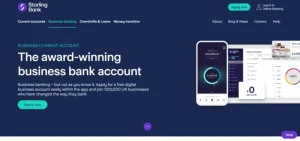
1. Starling Business Account
Starling Business Account is a digital current account for eligible UK limited companies and limited liability partnerships. Founders can receive payments, pay suppliers and manage transactions through an app or online banking.
A separate Starling account is available for sole traders.
It is particularly worth considering when most transactions are digital UK payments. Spending notifications, receipt capture and Spaces for setting money aside can help with daily administration. Businesses paying in cash should calculate the deposit charges.
| Feature | Details |
| Monthly Account Fee | £0 for the standard GBP account |
| UK Faster Payments | Free |
| Cash Deposits | Post Office deposits cost 0.7%, with a £3 minimum per deposit |
| Accounting Connections | Xero, QuickBooks and FreeAgent |
| Director Access | Additional eligible directors can access the account without an extra account-access fee |
| Customer Support | Available 24/7 |
| Main Limitation | Cash deposits and certain additional services cost extra |
A Useful 2026 Update: Starling launched its free Making Tax Digital for Income Tax tool on 17 March 2026. Eligible sole trader customers can submit quarterly updates directly from their account. VAT return submission belongs to the paid Accounting Plus service.
2. Monzo Business Account
Monzo Business is an app-based banking service for eligible UK sole traders and limited companies. Its Lite, Pro and Team plans let founders choose between basic account management and additional accounting or staff-management features.
Lite can suit a founder who mainly needs to receive customer payments and pay suppliers. Pro becomes more relevant when integrated accounting and tax pots are useful, while Team adds controls for businesses with employees.
Choose the plan around tasks you actually need to perform.

| Feature | Details |
| Monthly Account Fee | Lite £0, Pro £9, Team £25 |
| UK Bank Transfers | Free |
| Eligible Business Types | Sole traders and limited companies, subject to further criteria |
| Integrated Accounting | Available on Pro and Team |
| Team Features | Team includes expense cards and payment-approval features |
| Customer Support | Available 24/7 |
| Main Limitation | Several useful administrative features require a paid plan |
Key Point: A free Monzo Lite account and a paid Monzo Pro account do not include the same accounting functionality. A founder choosing Pro specifically for those tools should budget £108 over a normal 12-month period, before any introductory discount or other charges.
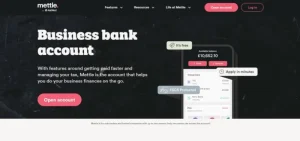
3. Mettle Business Account
Mettle is a digital business bank account provided by National Westminster Bank plc. It is designed for sole traders and eligible small limited companies, with tools for organising payments, invoices and business records.
The account can appeal to founders who want banking and bookkeeping to work together. FreeAgent is included when the required account activity is maintained, although cash services and optional extras still have charges.
Its access rules are especially important for co-founders.
| Feature | Details |
| Monthly Account Fee | £0 |
| Optional Mettle+ | £4 per month |
| FreeAgent | Included when at least one qualifying account transaction is made each month |
| Cash Deposits | £2.75 per Post Office deposit, subject to limits |
| Cash Withdrawals | £1 per withdrawal |
| Business Structure | Sole traders and eligible limited companies with up to two owners |
| Main Limitation | Only one owner can access the account |
Key Point: Having two owners does not give a company two Mettle logins. If both founders need to operate the account independently, this restriction could outweigh the savings on software. FreeAgent’s own charges can also apply if Mettle’s activity condition is not met.
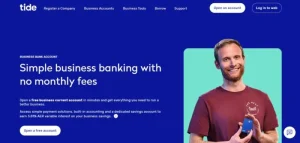
4. Tide Business Account
Tide combines a business current account with invoicing, payment and administrative tools for eligible sole traders and limited companies. Its current business bank accounts are provided by ClearBank, while Tide supplies the platform founders use to manage them.
The free plan offers a way to start without a subscription, but payment activity affects the bill. Paid plans change allowances and bundled services, so compare the complete package before upgrading.
| Feature | Details |
| Free Plan Monthly Fee | £0 |
| Included Transfers | Five per month on the free plan |
| Additional Standard Transfers | 20p each after the allowance, including applicable incoming and outgoing payments |
| UK GBP Card Payments | Free |
| Paid Plans | Smart, Pro and Max offer different allowances and tools |
| Deposit Protection | Eligible ClearBank deposits receive FSCS protection |
| Main Limitation | Receiving payments can contribute to transaction charges as well as sending them |
Key Point: Tide and ClearBank perform different roles. Your account branding may say Tide, but the underlying bank matters when checking deposit protection. Eligible money held with ClearBank through other products can count towards the same protection limit.
5. HSBC Small Business Banking Account
HSBC Small Business Banking Account is a current account combining digital banking with access to business specialists and in-person services. It accepts a broader range of legal structures than some app-only options, subject to its application criteria.
For a founder who wants digital payments without a monthly account fee, it is worth comparing alongside challenger banks. However, included electronic banking does not make cash handling, international transfers or every specialist payment free.
| Feature | Details |
| Monthly Account Fee | £0 |
| Standard UK Digital Banking | Included through the business app and internet banking |
| Business Structures | A range of legal entities, subject to eligibility |
| Account Access | Desktop and mobile access, with support for multiple users |
| Business Support | Specialists available virtually or in person |
| Other Charges | Cash, cheque, CHAPS and international services can incur fees |
| Main Limitation | Businesses using services outside standard digital banking need to check the price list |
Key Point: HSBC’s free UK digital banking has a defined scope. A CHAPS payment is not treated like an ordinary included electronic transfer. A startup making occasional large or urgent payments should check the relevant payment method before budgeting for it.
6. NatWest Startup Account
NatWest’s Startup Account is aimed at businesses trading for less than a year with turnover below £1 million. It combines an introductory period of everyday banking with accounting software and business support.
It can suit founders who want access to a wider banking network while establishing their business. The important comparison is between the first two years and the tariff that applies afterwards.
| Feature | Details |
| Startup Eligibility | Trading for less than one year with turnover below £1 million |
| Introductory Banking | Two years of free eligible everyday transactions |
| Afterwards | Standard transaction tariff, with no minimum monthly charge |
| Accounting Software | FreeAgent included while the qualifying account is retained, with optional extras potentially chargeable |
| Banking Access | App, online and branch services |
| Borrowing | Separate eligibility and approval requirements |
| Main Limitation | Standard transaction costs apply after the startup period |
Key Point: The two-year offer concerns everyday banking charges. It does not mean the account automatically becomes a fixed monthly subscription afterwards. NatWest’s standard tariff has no minimum monthly charge, but the transactions your business makes can generate fees.
7. Lloyds Business Account
Lloyds Business Account provides day-to-day banking for new and growing businesses, with digital access and options for managing other people’s account permissions. Its startup proposition includes an initial period without the monthly account fee.
It is worth considering when a founder wants established banking services and flexibility to involve employees or an accountant. Budget for the ongoing subscription and check transaction costs independently of the introductory offer.
| Feature | Details |
| Introductory Account Fee | £0 for 12 months if this is the business’s first Lloyds Business Account |
| Ongoing Monthly Fee | £10 |
| Additional Users | Access options include full, delegate and view-only permissions |
| Debit Cards | Unlimited free debit cards advertised with the account |
| International Payments | Available through digital banking, with relevant charges |
| Borrowing | Applications assessed separately |
| Main Limitation | £120 in annual account fees after the introductory period, before other charges |
Key Point: Giving an accountant view-only access can help with bookkeeping without allowing them to make payments. This is a different arrangement from giving someone full control of the account, so decide responsibilities before adding users.
8. Barclays Business Account
Barclays Business Account is a current account for businesses that want digital banking alongside access to broader business services. Eligible new business banking customers can receive 12 months without the monthly account fee.
It may suit a startup that values an established banking relationship as its payment and borrowing needs develop. The offer is useful only when its eligibility conditions fit your business, and chargeable services still need to be considered.
| Feature | Details |
| Introductory Monthly Fee | £0 for the first 12 months for eligible new business banking customers |
| Ongoing Monthly Fee | £8.50 |
| Digital Banking | Included simple electronic payments, as defined by the applicable tariff |
| Cash and Cheques | Charges apply under the account tariff |
| Business Services | Access to additional banking and borrowing products, subject to eligibility |
| Offer Restriction | Businesses with an existing Barclays Business Account are not eligible for this introductory fee offer |
| Main Limitation | The fee waiver does not remove every transaction charge |
Key Point: Opening a Barclays current account does not establish that your startup qualifies for an overdraft or loan. Treat account access and borrowing as separate decisions, especially if the business has limited trading history.
9. The Co-operative Bank Business Bank Account
The Co-operative Bank’s standard Business Bank Account is aimed at startups and small businesses that mainly bank digitally. It offers everyday account services without a monthly subscription and includes access to payment-request and accounting-connection tools.
It can be a practical option for businesses receiving invoices electronically and making regular supplier payments. Founders handling cash should compare its transaction tariff with the bank’s other business account options.
| Feature | Details |
| Monthly Account Fee | £0 for the standard Business Bank Account |
| Automated Debits and Credits | Free |
| UK Debit Card Purchases | Free |
| Cash and Cheques | Charges apply |
| Business Tools | Go Get Paid access and accounting-software integration |
| Other Account Options | Business Bank Account Plus and Business Directplus have different terms |
| Main Limitation | Costs depend on the exact account selected and how often you use chargeable services |
Key Point: The standard Business Bank Account is not the same product as Business Directplus. A review describing Directplus’s introductory terms should not be used to estimate the standard account’s charges. Confirm the full product name before applying.
10. Zempler Business Go Account
Zempler Business Go is a business current account with no monthly subscription and access through an app and online banking. It supports cash deposits at Post Offices and provides a small monthly allowance for outgoing payments.
The account may suit a business with relatively few outgoing transfers. A startup paying many suppliers or contractors should calculate transaction charges before choosing the free plan.

| Feature | Details |
| Monthly Account Fee | £0 |
| Receiving UK Payments and Transfers | Free and unlimited |
| Sending Payments and Transfers | Three free per month, then 35p each |
| Post Office Cash Deposits | 0.55% of the amount deposited, with a £4 minimum |
| UK Cash Withdrawals | £2 each |
| Paid Alternatives | Business Extra and Business Pro provide different allowances |
| Main Limitation | Frequent outgoing payments can make the free plan expensive |
Key Point: A business making 100 chargeable outgoing transfers every month would pay £33.95 monthly after the three free transfers. That is £407.40 over a year, before other charges. The calculation shows why payment volume matters more than the £0 headline fee.
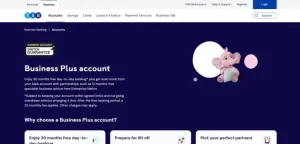
11. TSB Business Plus Account
TSB Business Plus is a current account offering an introductory period of free day-to-day banking for eligible startups and switchers. It combines digital banking with cash and cheque facilities through TSB branches and the Post Office.
The account deserves consideration if your startup wants a longer introductory period. Check the definition of included everyday banking and what you will pay when that period ends.
| Feature | Details |
| Introductory Banking | 30 months of free eligible day-to-day banking |
| Ongoing Monthly Fee | £5 after the introductory period |
| Digital Banking | App and internet banking |
| Cash and Cheques | Branch and Post Office facilities, subject to terms |
| Introductory Conditions | Keep the account within agreed limits and avoid unarranged borrowing |
| Additional Charges | Services outside the offer can still be chargeable |
| Main Limitation | The introductory period does not cover every possible banking service |
Key Point: Thirty months is two and a half years. Under the current tariff, a startup keeping the account for three full years would pay six monthly account fees, totalling £30, assuming it qualifies throughout the introductory period. Transaction and other charges are additional.
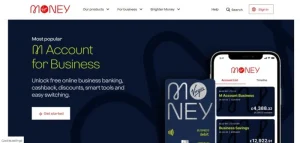
12. Virgin Money M Account for Business
Virgin Money’s M Account for Business is a digital-focused account for eligible businesses with annual turnover below £1 million. It accepts several business structures and offers standard app and online banking without a monthly account fee.
It can suit a small startup that expects to remain below the turnover threshold. Location matters as well as financial size, so confirm eligibility before comparing its other features.
| Feature | Details |
| Monthly Account Fee | £0 |
| Day-to-Day App and Online Banking | Free |
| UK Debit Card Payments | Free |
| Direct Debits and Standing Orders | Free |
| Turnover Requirement | Below £1 million, including expected turnover for startups |
| Location Restriction | Business must operate and be based in the UK, excluding Northern Ireland, the Channel Islands and Isle of Man |
| Main Limitation | Cash and certain specialist or international services have separate charges |
Key Point: This account’s geographic eligibility excludes Northern Ireland. A startup can be UK-based and still fall outside the product’s rules. Checking the location requirement early avoids spending time comparing an account the business cannot open.
13. Royal Bank of Scotland Startup Account
Royal Bank of Scotland’s Startup Account is designed for eligible businesses trading for less than one year with turnover below £1 million. It combines introductory everyday banking with FreeAgent and access to business support.
Founders comparing it with another startup account should examine the services they will use after the free period as well as the initial offer. Branch convenience and the application route can also influence the decision.
| Feature | Details |
| Startup Eligibility | Trading for less than one year with turnover below £1 million |
| Introductory Banking | Two years of free eligible everyday transactions |
| Ongoing Pricing | Standard business transaction charges, with no minimum monthly charge |
| Accounting Software | FreeAgent included with the qualifying account, with optional extras potentially chargeable |
| Account Management | Digital banking and branch services |
| Borrowing | Subject to separate assessment |
| Main Limitation | Older businesses may need a different account or offer |
Key Point: The trading-history condition matters independently of turnover. A business earning very little after more than a year of trading does not qualify for this particular startup account simply because it is still small.
14. Santander Business Current Account – Classic
Santander’s Business Current Account – Classic combines online and mobile banking with access to Santander branches and cash machines. Eligible startups can receive 12 months of introductory banking before the standard monthly fee applies.
It may be worth comparing for a startup that occasionally deposits cash. The deposit method is important because an allowance available at a Santander cash machine does not automatically apply to other channels.

| Feature | Details |
| Introductory Monthly Fee | £0 for 12 months for eligible startups |
| Standard Monthly Fee | £9.99 |
| Cash Deposit Allowance | Up to £1,000 free at Santander cash machines per monthly billing period |
| Banking Access | App, online, Santander branches and applicable Post Office services |
| Overdraft | Available subject to status and approval |
| Additional Charges | Charges can apply outside included services and allowances |
| Main Limitation | The regular account fee is £119.88 a year before other charges |
Key Point: The £1,000 cash-deposit allowance is specifically for Santander cash machines. Check the tariff separately for depositing at a branch counter or Post Office, even when the amount is the same.
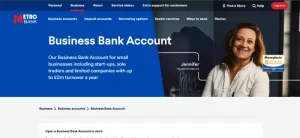
15. Metro Bank Business Bank Account
Metro Bank Business Bank Account provides digital and in-person banking for eligible small businesses, including startups. It offers a local business contact and a pricing structure influenced by the cleared balance held in the account.
It may suit founders who value store access and expect to maintain a steady cash balance. A startup with tight working capital should calculate the standard fee without assuming it will always qualify for a waiver.
| Feature | Details |
| Standard Monthly Fee | £8 |
| Balance Reward | Monthly fee waived when cleared funds stay at £6,000 or above throughout the month |
| Included Transactions With Balance Reward | 30 qualifying transactions per month |
| Business Size | Turnover and/or annual balance sheet total must not exceed £2 million |
| Banking Access | App, online, telephone and stores |
| New-Customer Offer | 12 months of eligible fee-free banking for qualifying new-to-bank customers. Cash, international payments and certain other services are excluded |
| Main Limitation | Falling below the balance threshold on any day removes the standard monthly balance reward |
Key Point: Metro’s balance condition is not a monthly average. Under its published standard terms, dropping below £6,000 on one day can mean standard pricing applies for that month. Keep this in mind when a large supplier bill is due.
Comparison Table: All 15 Startup Business Bank Accounts
Use this table to compare the main pricing model after reading the individual reviews. Introductory offers apply only to qualifying applicants. A monthly fee waiver does not automatically include cash, foreign payments, borrowing or software upgrades.
| Account | Monthly Account Fee | Introductory Position | Main Cost or Eligibility Check |
| Starling | £0 | No standard monthly fee | Cash deposits cost at least £3 |
| Monzo | Lite £0, Pro £9, Team £25 | Any trial depends on current terms | Accounting integrations require Pro or Team |
| Mettle | £0 | No standard monthly fee | One owner has access, cash services cost extra |
| Tide | £0 on Free | Paid plans provide different allowances | Five free transfers, then 20p for applicable standard transfers |
| HSBC Small Business Banking | £0 | No standard monthly fee | Free digital banking excludes some payment types |
| NatWest Startup | No minimum monthly charge | Two years of eligible everyday banking | Standard transaction charges afterwards |
| Lloyds | £10 after the offer | No account fee for 12 months if eligible | Transaction charges can apply separately |
| Barclays | £8.50 after the offer | No account fee for 12 months if eligible | Existing Barclays business customers do not qualify for this fee offer |
| Co-operative Business Bank Account | £0 | No standard monthly fee | Distinguish it from Plus and Directplus |
| Zempler Business Go | £0 | No standard monthly fee | Three free outgoing payments, then 35p each |
| TSB Business Plus | £5 after the offer | 30 months of eligible day-to-day banking | Additional services and subsequent transactions can cost extra |
| Virgin Money M Account | £0 | No standard monthly fee | Turnover below £1 million and geographical restrictions |
| RBS Startup | No minimum monthly charge | Two years of eligible everyday banking | Trading for less than one year and turnover below £1 million |
| Santander Classic | £9.99 after the offer | 12 months for qualifying startups | Cash allowance depends on deposit channel |
| Metro Bank | £8, potentially waived | 12 months of eligible banking for qualifying new-to-bank customers | Standard waiver requires at least £6,000 throughout the month |
Eligible deposits in the bank accounts discussed can receive FSCS protection, subject to the relevant rules and shared limits. For a platform or branded account, check the underlying authorised bank rather than relying on the trading name.
How Do You Choose the Right Account for Your Startup?
Match the Account to Your Business Structure
Start with eligibility. A sole trader, limited company and LLP may not have access to the same products. The bank can also consider ownership, director residency, business activity and whether you handle money belonging to clients.
For a company, banking must be kept separate from the directors’ personal banking. A sole trader should also check whether their personal account’s terms permit business use. A dedicated account usually makes business records easier to manage.
Before comparing features, confirm:
- Your Business Structure Is Accepted
- Your Industry Is Supported
- Directors and Owners Meet Residency Requirements
- Your Expected Turnover Meets the Account Rules
- All Necessary Users Can Access the Account
Compare First-Year and Ongoing Costs
Estimate how often you will send and receive payments, deposit cash and use paid features. Then repeat the calculation using the charges that apply after any offer ends.
These examples show individual cost components, assuming the published fees remain unchanged. They are not complete bills or guarantees of eligibility.
| Example Startup Activity | Illustrative Calculation | Cost |
| Freelancer Making 100 Outgoing UK Faster Payments Monthly With Starling | No transfer charge for these payments | £0 for the transfers |
| Business Making 100 Chargeable Outgoing Transfers Monthly With Zempler Go | 97 × £0.35 after the allowance | £33.95 monthly |
| Retailer Making Four £250 Post Office Deposits With Starling | Each deposit attracts the £3 minimum | £12 monthly |
| Agency Using Monzo Team for a Normal Full Year | 12 × £25 | £300 in subscription fees |
The remaining bill could include incoming-payment fees, software, cash withdrawals, international transfers and borrowing. Do not subtract cashback unless your expected spending meets the reward conditions.
Check Accounting Tools, Cash Deposits and International Payments
An accounting connection is not always a free software subscription. Confirm whether the bank merely sends data to a service you must pay for separately. If software is included, check activity requirements, duration and paid extras.
For cash, compare the deposit location as well as the percentage fee and minimum charge. A £3 minimum can make several small deposits more expensive than one larger deposit, although security and banking limits also matter.
If you pay overseas suppliers, compare the full amount the recipient receives for the same GBP cost. Transfer fees, exchange-rate mark-ups and intermediary deductions can all matter.
A specialist international payment service may complement your main bank account, but its protections and functionality need separate assessment.
Assess Co-Founder Access and Customer Support
Decide whether another person needs to view transactions, create payments or approve them. These are different permissions. Giving an accountant a bank feed is also different from giving them account control.
For a growing team, ask about spending limits, expense cards and payment approvals. Check how to contact the provider if a payment is delayed or an account needs review.
Being able to open an app at any time does not necessarily mean every support service operates around the clock.
How Do You Open a Business Bank Account for a New Startup?
Documents and Business Information to Prepare
Requirements vary, but preparing consistent information can reduce avoidable delays. A company’s registered details should match its application, and the description of trading activity should explain how it expects to receive money.
- Photo Identification for Relevant Applicants
- Residential and Business Address Evidence Where Requested
- Company Registration Details, Where Applicable
- Director, Shareholder and Beneficial Ownership Information
- Expected Turnover, Customers and Payment Activity
- Evidence of Trading or Planned Activity, if Requested
Applying Before Your Business Starts Trading
You may be able to open an account before the business receives its first customer payment. Explain that it is a new venture and provide accurate forecasts instead of presenting expected income as existing turnover.
Depending on the provider, useful evidence could include a business plan, website, supplier agreement or customer contract. Registration at Companies House does not by itself guarantee account approval.
Opening-deposit requirements vary. Even when the bank does not require one, keep enough money available for any subscription, payment or other charges you expect to incur.
Credit Checks, Approval Times and Declined Applications
Identity and anti-money-laundering checks are different from an assessment of whether to lend. Some providers also perform credit checks when opening a current account. Read the application terms, particularly if you request an overdraft.
Completing an online form in ten minutes does not mean the account will be fully approved in ten minutes. Ownership checks, the type of business and missing documents can extend the process.
If an application is declined, check whether you can correct missing information or use an available review process. Providers may be unable to explain every reason. Review the next provider’s criteria before submitting another application.
How Is Your Startup’s Money Protected?
FSCS Protection Versus Safeguarding
FSCS deposit protection can compensate eligible depositors when an authorised bank fails, up to the applicable limit. It does not mean every business loss, disputed transfer or scam payment is covered.
Safeguarding is a different arrangement used by payment and e-money institutions.
Relevant customer funds are separated or otherwise protected under safeguarding rules, but this is not the same as holding an FSCS-protected bank deposit. Recovery can involve delays and deductions if a provider fails.
Protection for Sole Traders and Limited Companies
A sole trader and their business are the same legal person. For example, £80,000 of personal deposits and £50,000 of sole-trader deposits at the same authorised bank would total £130,000 against the standard £120,000 limit, assuming all deposits are eligible.
An eligible limited company is a separate legal entity. Its deposit protection is assessed separately from the director’s personal deposits. The company does not receive an additional limit for every shareholder or bank account.
Shared Banking Licences and Deposit Limits
Different brands can use the same authorised bank. Mettle’s bank account is provided by National Westminster Bank plc, while Tide’s current bank accounts are provided by ClearBank. Check any other deposits held with the same institution when calculating protection.
Use the FSCS protection checker and the account’s depositor information sheet to confirm the legal provider. If your business accumulates a larger cash balance, review where it is held rather than assuming a second branded account creates another allowance.
When Should Your Startup Upgrade or Switch Accounts?
Signs Your Current Account No Longer Fits
The account that worked before your first sale may become less suitable after hiring employees or winning overseas customers. Review it when the way your business operates changes.
- Transaction Charges Rise With Payment Volume
- More People Need Separate Permissions
- Cash Deposits Exceed Practical Limits
- Overseas Payments Become Frequent
- Accounting Work Requires Expensive Add-Ons
- Your Business Needs Different Support or Borrowing Facilities
Comparing Paid Upgrades With Alternative Providers
A paid upgrade can be worthwhile if it replaces transaction fees or software you would otherwise buy. Compare the full annual cost and whether the included functions are useful to your business.
If you need finance, compare overdraft interest, arrangement fees and any personal guarantee separately. A banking upgrade does not guarantee a credit facility, and moving banks may involve a new lending assessment.
Switching Without Disrupting Business Payments
The Current Account Switch Service can move eligible business current accounts between participating providers in seven working days.
Its business eligibility includes annual turnover not exceeding £6.5 million and fewer than 50 employees. Confirm that your account and providers qualify.
Arrange the switch through the new provider. The old account closes as part of a full CASS switch, so do not close it yourself first. For a business that wants to keep both accounts, discuss an alternative arrangement.
| Before Switching | What to Check |
| Accounting Records | Download statements and reconnect bank feeds |
| Customer Payments | Update invoices and payment instructions |
| Card Subscriptions | Replace stored card details where necessary |
| Payment Processors | Update the settlement account and complete any verification |
| Borrowing | Agree how existing overdrafts or other facilities will be handled |
Incoming and outgoing payments covered by CASS are handled through the service. Connected software, saved card details and third-party payment systems can still need your attention.
Conclusion
The best business bank account for your startup is the one your business can open, afford and use effectively.
Starling and Monzo Lite are useful digital options to compare, Mettle offers accounting benefits with access restrictions, and providers such as NatWest and TSB offer introductory banking for eligible new businesses.
Shortlist two or three accounts using your expected payments, cash deposits, ownership structure and software needs. Calculate a normal year’s cost after any promotion ends, then check the current eligibility and tariff before applying.
Frequently Asked Questions
Which Business Bank Account Is Best for a Startup With No Income?
Look for an account that accepts businesses before trading starts and does not impose an unsuitable opening deposit or turnover requirement. Starling, Monzo, Mettle and bank startup products are worth checking against your circumstances. No provider guarantees acceptance simply because an account has no monthly fee.
Can I Open a Business Bank Account Before I Start Trading?
Yes, some providers accept pre-trading businesses. You will still need to pass their checks and explain what the business intends to do. A limited company generally needs to be incorporated before applying in its company name. Evidence requirements vary by provider.
Do Sole Traders and Limited Companies Need Different Accounts?
They need accounts appropriate to their legal structure. Company banking must remain separate from the directors’ personal banking. A sole trader should check the bank’s terms before using a personal account for business. Some providers offer separate sole-trader and company products, while others support both through one account range.
Are Free Business Bank Accounts Completely Free?
Usually, “free” describes the absence of a monthly account fee or the inclusion of particular transactions. Cash deposits, withdrawals, international payments, transfers above an allowance and paid software can still cost money. Calculate the fees for your expected activity rather than relying on the product label.
Can Two or More Founders Access the Same Business Account?
Some accounts support multiple directors or users, but permissions and costs vary. Check whether each person can view, create or approve payments. Mettle illustrates the distinction: an eligible company can have two owners, but only one owner can access its account.
Can I Open a Startup Business Account With Poor Personal Credit?
It may be possible, depending on the provider, the business and the checks involved. Poor credit can restrict account or borrowing options, and some providers exclude particular adverse-credit histories. An account without an overdraft still requires identity and other checks. Avoid treating “no credit check” advertising as guaranteed approval.
Can My Startup Have More Than One Business Bank Account?
Yes, businesses can generally use more than one account, subject to each provider’s terms. Separate accounts may help organise payments, reserves or overseas activity. Keep records clear, account for extra fees and check whether the accounts share the same authorised bank for deposit-protection purposes.