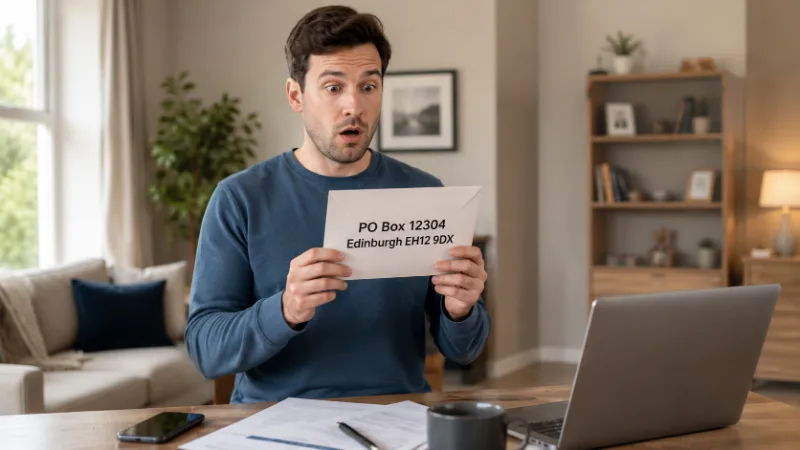

PO Box 12304 Edinburgh EH12 9DX has historical links to Lloyds card correspondence. Older reports describe replacement cards, PIN notifications and other account letters.
However, the address alone cannot confirm who sent your particular letter or whether it is genuine. Check the named organisation and verify any unexpected request through its official app, website or a trusted contact number before paying or sharing information.
| Detail | Information |
| Full Address | PO Box 12304, Edinburgh, EH12 9DX |
| Historical Association | Lloyds card services, based on older reports and directory information |
| Reported Correspondence | Replacement cards, PIN notifications and account letters |
| Current Verification Status | Current official confirmation of this exact PO Box was not found in the sources checked |
| Authenticity Check | The printed address alone does not prove that a letter is genuine |
| Recommended Action | Verify unexpected correspondence through the named bank’s official app, website or a trusted number |
Last Updated: 02.09.2026
Who Is Linked to PO Box 12304 Edinburgh EH12 9DX?
Historical Links to Lloyds Card Services
An older discussion from 2011 identifies the address on a Lloyds TSB Card Services repayment letter. A banking directory also lists it under Lloyds Card Operations.
These references provide evidence of an association with card correspondence. They do not establish that every department uses the address today or that it is suitable for every customer enquiry.
Reports Involving Halifax and MBNA
Some historical recipient comments mention Halifax and MBNA correspondence. These are individual reports rather than current confirmation from the banks.
Shared banking-group membership does not establish that every brand or product uses the same postal address. The organisation named inside your letter is the starting point for further checks.

What the Full Address Can Tell You?
The address being searched is PO Box 12304, Edinburgh, EH12 9DX.
A PO Box provides an alternative address for receiving mail. It does not, by itself, identify a public bank branch, a particular customer service team or the reason a letter was sent.
Likewise, an Edinburgh postal address does not establish where you opened your account or which branch manages it.
What Is Known About This Address in 2026?
The review for this article was completed on 2 September 2026. The distinction that matters is between evidence of historical use and confirmation of current arrangements.
Older information can help identify a possible sender, but it should not be treated as a current contact directory. Telephone numbers, departments and correspondence arrangements can change.
What Does the Available Evidence Support?
| Information | Evidence Available | Limitation |
| Association With Lloyds Card Correspondence | Older recipient reports and a directory entry | Does not authenticate an individual letter |
| Reports Involving Other Banking Brands | Historical recipient comments | Does not confirm current use by each brand |
| Current Department Using the PO Box | Not established through current official confirmation in this review | Ask the named bank about your specific correspondence |
| Correct Address for Your Reply | Depends on the enquiry and the bank’s instructions | Verify before posting documents |
What Remains Unconfirmed?
The sources checked do not establish the complete list of organisations currently using the PO Box, whether its handling arrangements have changed or which enquiries it accepts today.
This uncertainty does not mean that a letter is fraudulent or that the address has stopped being used. It means that a current, individual check is needed before relying on it.
There is no verified address change identified in this review that would justify claiming a new arrangement for 2026.
Why Might You Receive a Letter From This Address?
Replacement Cards and PIN Notifications
Historical reports include replacement credit cards and PIN notifications. If you have recently requested a replacement, check that the correspondence matches the account and request you recognise.
An unfamiliar card needs closer attention. A replacement for an existing account is different from a card issued for an account you have never opened.
Account Changes and Other Correspondence
Reports also mention account terms and repayment correspondence. The actual purpose should be established from the contents of the letter and, where necessary, confirmed with the named bank.
Avoid assuming that any letter bearing this address concerns a mortgage, tax bill, benefit payment or particular financial product. The envelope does not provide enough information to make that judgement.
Does Receiving a Letter Mean You Owe Money?
Receiving an envelope with this address does not establish that you owe a debt. Read correspondence addressed to you and identify what, if anything, it asks you to do.
If it demands payment for an account you do not recognise, contact the named organisation through an independently verified channel. Ask it to explain the account and confirm the request before you pay.
Note any deadline while you make those checks. A request should not be ignored simply because the address is unfamiliar.
How Can You Check Whether the Letter Is Genuine?
Check the Recipient and Account Details.
Start with the name on the envelope and the details inside. Is it addressed to you, your company or someone else? Does it mention an account or recent request you recognise?
Compare any partial account reference with your own records. However, correct names, addresses, logos and professional formatting do not prove that the correspondence is genuine.
Envelope codes and postal markings may identify a mailing process. They should not be treated as security checks.
Contact the Bank Through an Independent Channel
Use this simple process when a letter is unexpected:
- Open your banking app independently or access the bank’s official website directly.
- Choose the contact route for the relevant account or product.
- Explain that you want to verify a letter and describe its date, subject and reference.
- Ask whether the bank sent it and what action, if any, is required.
A trusted number from an existing bank card is another option. Avoid relying solely on a telephone number, web address or QR code printed in the letter you are trying to verify.
Lloyds’ fraud guidance recommends checking unexpected communications using contact details you trust.
Recognise Requests That Need Extra Caution
Pause and verify if the correspondence asks you to:
- Transfer money to a new or supposedly safe account
- Disclose your PIN, banking password or one-time passcode
- Contact someone urgently using unfamiliar details
- Keep the request secret from colleagues or family
- Install software or allow someone to control your device
Do not disclose security codes to someone who contacts you unexpectedly. If a follow-up caller claims to be investigating the letter, verify that call independently as well.
What Should You Do With Unexpected or Incorrectly Addressed Mail?
The right response depends on whose name appears on the letter and whether the account is familiar.
| Situation | Appropriate Next Step |
| Your Name and an Account You Recognise | Check the letter against your records and verify any unexpected instruction |
| Your Name but an Unfamiliar Account | Contact the named issuer promptly through verified contact details |
| A Card for an Account You Never Opened | Ask the issuer to investigate and do not use the card |
| A Previous Occupier’s Name | Follow Royal Mail’s return-to-sender procedure |
| An Unknown Person’s Name | Return the mail rather than treating it as your account correspondence |
| Your Company’s Name | Pass it to an authorised account holder or finance contact |
Your Name Appears, but You Do Not Recognise the Account
An unfamiliar account in your name could involve an administrative error or misuse of your identity. The letter alone does not establish which explanation applies.
Ask the named organisation whether an application or account exists and what steps are needed to investigate. Keep the envelope and letter while the issue is being resolved.
A Card Arrives That You Did Not Request
Check whether you have an existing card approaching expiry or a replacement you expected. If the account itself is unfamiliar, do not activate or use the card.
Lloyds advises contacting the issuer immediately when a credit card arrives that you did not apply for. Use independently verified contact details to do this.
The Letter Is Addressed to Someone Else
If it is for a former occupant or an unknown person, keep it unopened and follow Royal Mail’s guidance. Cross out the address, write “Not known at this address” or “No longer lives here”, and put it in a postbox.
Mail in somebody else’s name requires a different response from an unfamiliar account bearing your own name. In the latter situation, contact the named issuer rather than simply returning the envelope.
Can You Reply to PO Box 12304 Edinburgh?
Verify the Correct Address for Your Enquiry
Do not assume that the address on an envelope is the correct destination for a complaint, identity document or account enquiry.
A return address may serve a different purpose from the correspondence address for a particular team. Check the reply instructions with the bank before posting sensitive material, especially if the letter was unexpected.
Ask which documents are required, whether copies are acceptable and which reference to include. Keep a record of what you send.
Find the Right Customer Support Team
Choose the contact route according to the issue rather than searching for one telephone number associated with the PO Box.
| Reason for Contact | Team or Channel to Look For |
| Credit Card Letter or Replacement | The Named Issuer’s Credit Card Support |
| Suspected Fraud or an Unfamiliar Account | The Bank’s Fraud or Account-Security Support |
| Business Account Correspondence | The Bank’s Business Banking Support |
| Formal Complaint | The Bank’s Published Complaints Process |
Check the purpose of any number before calling. A Private Banking contact number, for example, should not be assumed to provide general credit card support.
Do Not Use Directory Details as Payment Instructions
A banking directory may display a sort code beside a postal address. That does not make the listing an instruction to send money there.
Use payment details verified through your own account, an authenticated statement or the bank’s official support team. Do not construct payment instructions from search results or an address lookup.
What Should Business Owners Do With Unexpected Bank Mail?
Check Whether the Letter Concerns the Business or an Individual
An envelope delivered to business premises may concern the company, a sole trader, a director personally or a previous occupant.
Check the addressee before routing it internally. A director’s personal correspondence should not automatically be treated as a company liability, and a company letter should reach someone authorised to manage the relevant account.
The PO Box alone does not establish that the letter concerns a business banking product.

Follow a Simple Internal Verification Process
A consistent procedure helps prevent sensitive correspondence being lost or acted on prematurely:
- Record the arrival date and any stated deadline
- Pass the letter to the authorised account holder or finance contact
- Verify unfamiliar accounts and payment requests independently
- Confirm changes to payment details using an established contact route
- Keep correspondence in a secure location with appropriate access
- Record the action taken and any follow-up required
Avoid uploading unredacted letters to public forums or sharing card details, PIN notifications and account references in group chats. When asking for help, provide only the information needed through the organisation’s verified channel.
Frequently Asked Questions About PO Box 12304 Edinburgh
Is PO Box 12304 Edinburgh an HMRC or DWP Address?
The evidence reviewed associates the address with banking correspondence. It does not establish an HMRC or DWP connection. If a letter claims to come from a government department, check it independently through that department’s official contact route.
Can You Visit PO Box 12304 Edinburgh in Person?
You should not treat this PO Box as a walk-in bank branch or customer service office. Contact the named bank to find a suitable branch or support channel for your enquiry.
What Should You Do if You Lose the Letter?
Contact the organisation you believe sent it using verified details. Explain approximately when it arrived and what you remember about its subject. Ask whether it can confirm the correspondence, provide another copy and explain any outstanding deadline.
Does an Edinburgh Address Mean Your Account Is Based in Scotland?
No such conclusion can be drawn from the postal address alone. It identifies a correspondence destination and does not establish where you opened your account or which branch manages it.
What Should You Do if You Have Already Shared Details or Paid?
Contact your bank immediately through its official app or a trusted telephone number. Explain what you shared, when it happened and whether you made a payment. Ask it to secure the affected account or card and investigate the transaction.
Keep the letter, payment records and details of related calls or messages. If a banking password was exposed, change it through the official service, and change it elsewhere if you reused it. Follow the bank’s instructions for any compromised card or security credentials.