Starting a small business while studying can give students more than an extra source of income. It can help them develop practical skills in sales, marketing, customer service, budgeting and problem-solving while building experience that may strengthen a future CV or career.
Some of the best business ideas for students are deliberately simple. They require little equipment, can be operated around lectures and exams, and allow the student to test demand before committing significant money.
Online tutoring, freelance writing, social media management, graphic design, video editing, pet sitting and second-hand reselling are among the most accessible options. However, the right choice depends on the student’s existing skills, available time, university workload, legal status and willingness to find customers.
Importantly, students should not assume that a small side business is automatically outside UK tax or regulatory rules. HMRC requirements can apply to side-hustle income, while international students should check their visa conditions before carrying out self-employed work.
What Are the Best Business Ideas for Students?
The following comparison gives a practical starting point. Start-up costs are approximate estimates rather than guaranteed figures because equipment, software, insurance and marketing costs vary considerably.
1. Online Tutoring

Online tutoring is one of the most practical business ideas for students because it allows them to turn existing academic knowledge into a flexible service.
A university student who performs strongly in mathematics, English, science, computing, economics or languages may be able to tutor school pupils studying GCSEs or A-levels.
Students with specialist knowledge may also work with adult learners or people preparing for professional qualifications, provided they are competent in the subject being taught.
One of the main advantages is the low barrier to entry. A student who already owns a laptop, headset and reliable internet connection may be able to begin without purchasing much additional equipment.
Tutoring can also be arranged around university timetables. Evening and weekend sessions are common because these periods frequently suit school pupils and working adults.
What Does a Student Need to Start Tutoring?
| Factor | Typical Requirement |
| Estimated start-up cost | £0–£100 |
| Main equipment | Laptop, webcam, headset and internet connection |
| Main skills | Subject knowledge and communication |
| Where it can operate | Online or locally |
| Typical customers | School pupils, parents and adult learners |
| Flexibility | High |
| Revenue model | Hourly or lesson-based fees |
A student does not necessarily need to teach every subject. Specialising can make the service easier to market.
For example, positioning the business around GCSE mathematics tuition is clearer than advertising general tutoring across dozens of subjects.
Students should also remain within appropriate academic-integrity boundaries.
Helping someone understand a topic is legitimate tutoring, while completing assessed assignments on another person’s behalf can create serious ethical and disciplinary issues.
Those working with children should also consider safeguarding requirements and whether a DBS check may be appropriate for the work being undertaken.
Best suited to: Students with strong academic knowledge who enjoy explaining concepts to other people.
2. Proofreading and Editing

Proofreading and editing can be an accessible student business for somebody with excellent written English and close attention to detail.
Businesses, authors, job seekers, bloggers and professionals regularly need help improving documents before publication or submission.
A proofreader may correct spelling, punctuation and grammatical mistakes, while an editor might also improve sentence structure, clarity, tone and overall readability.
Students can initially focus on relatively straightforward work such as:
- CVs and cover letters;
- website content;
- newsletters;
- business presentations;
- blog posts;
- product descriptions; and
- marketing materials.
Because much of this work can be completed remotely, proofreading is particularly suitable for students who need to work around lectures or exams.
What Is Needed to Start a Proofreading Business?
| Factor | Typical Requirement |
| Estimated start-up cost | £0–£50 |
| Main equipment | Laptop and word-processing software |
| Main skills | Grammar, spelling and attention to detail |
| Where it can operate | Fully online |
| Typical customers | Businesses, writers and job seekers |
| Flexibility | Very high |
| Revenue model | Per word, per page, per project or hourly |
Building a small portfolio can make it easier to attract initial clients. Students might create sample before-and-after edits demonstrating how they improve clarity and correct errors.
Academic work requires additional caution. There is a difference between legitimate proofreading and substantially rewriting an assessed piece of work for another student.
A responsible business should establish clear boundaries so that its services do not facilitate academic misconduct.
Best suited to: Students with strong English-language and editing skills.
3. Freelance Writing and Copywriting

Freelance writing allows students to earn money by creating written content for businesses, publications and other organisations.
Potential assignments include website pages, newsletters, blog posts, product descriptions, case studies, email content and social media copy.
The business can usually be operated remotely and often requires little more than a laptop and internet connection.
A student can improve their chances of winning clients by choosing a specialist subject.
For example, a computing student may focus on technology content, while a business student might write about entrepreneurship, workplace topics or general business subjects.
Specialisation can help the writer demonstrate expertise and build a more focused portfolio.
Freelance Writing Business Overview
| Factor | Typical Requirement |
| Estimated start-up cost | £0–£100 |
| Main equipment | Laptop and internet connection |
| Main skills | Writing, research and communication |
| Where it can operate | Fully online |
| Typical customers | SMEs, agencies, publications and creators |
| Flexibility | Very high |
| Revenue model | Per article, per word, hourly or monthly retainer |
New writers should avoid competing purely on low prices.
Clients often value reliability, accurate research, clear communication and the ability to understand their industry as much as raw writing speed.
Students should also fact-check material carefully, particularly when writing about finance, health, law, taxation or other subjects where inaccurate information could affect readers’ decisions.
Artificial intelligence has changed the content market, but businesses still need human judgement, subject expertise, original research, interviewing ability and reliable fact-checking.
Best suited to: Students who enjoy researching topics and converting information into clear written content.
4. Social Media Management

Social media management can be a strong business opportunity for students who understand platforms such as Instagram, TikTok, LinkedIn, Facebook or YouTube.
Many small businesses want to maintain an active social presence but do not have enough time to plan posts, produce content and monitor engagement consistently.
A student social media manager might help with:
- planning a monthly content calendar;
- writing captions;
- creating simple graphics;
- producing short videos;
- scheduling posts;
- responding to comments; and
- reviewing basic performance data.
Instead of attempting to manage every platform, students may find it more effective to specialise.
For example, a student could offer Instagram management specifically for independent restaurants or short-form video support for local gyms.
Social Media Management Business Overview
| Factor | Typical Requirement |
| Estimated start-up cost | £0–£100 |
| Main equipment | Smartphone or laptop |
| Main skills | Content creation and digital marketing |
| Where it can operate | Mainly online |
| Typical customers | Local businesses, creators and professionals |
| Flexibility | High |
| Revenue model | Monthly retainers or fixed packages |
A simple starter package can be easier to sell than an open-ended service.
For example, the student might provide eight posts and four short videos each month for a fixed fee.
Students should avoid guaranteeing unrealistic results such as a specific number of followers or sales. Social media performance depends on numerous factors beyond the manager’s control.
The strongest service focuses on consistent content, useful reporting and business outcomes rather than vanity metrics alone.
Best suited to: Students interested in marketing, content creation and online communication.
5. Graphic Design
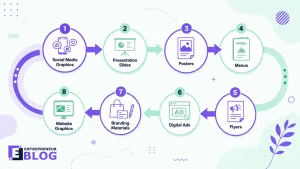
Graphic design can be turned into a student business when the individual already has design skills or is developing them through university study.
Small businesses frequently need visual materials but cannot justify employing a full-time designer.
A student could provide:
- social media graphics;
- presentation slides;
- posters;
- menus;
- flyers;
- digital advertisements;
- simple branding materials; and
- website graphics.
Tools such as Adobe Illustrator, Photoshop, Figma and Canva can be used depending on the complexity of the work.
The student does not necessarily need dozens of paying clients before creating a portfolio. Several high-quality demonstration projects can show prospective customers what the designer is capable of producing.
Graphic Design Business Overview
| Factor | Typical Requirement |
| Estimated start-up cost | £0–£200 |
| Main equipment | Laptop and design software |
| Main skills | Visual design and creativity |
| Where it can operate | Fully online |
| Typical customers | SMEs, creators, societies and local businesses |
| Flexibility | High |
| Revenue model | Per project, hourly or monthly package |
Copyright and licensing are important considerations.
A designer cannot assume that every image, illustration or font found online can legally be used in commercial work.
Using appropriately licensed assets and keeping records of their sources can reduce intellectual-property problems later.
Students may also benefit from specialising. Presentation design, restaurant menus or social-media graphics, for example, can each become a focused service.
Best suited to: Creative students with practical design abilities.
6. Video Editing
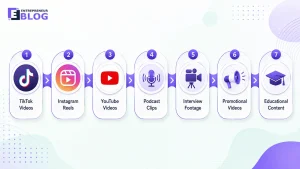
Video editing has become an increasingly useful service as businesses and creators publish more video content across social platforms.
Many companies can record footage themselves but do not have enough time to edit it consistently.
A student video editor might work on:
- TikTok videos;
- Instagram Reels;
- YouTube videos;
- podcast clips;
- interview footage;
- promotional videos; or
- educational content.
The business can often be operated entirely online, allowing clients to upload raw footage and receive completed videos electronically.
Students can begin with relatively simple editing before moving into more advanced services such as motion graphics, colour correction or professional audio processing.
Video Editing Business Overview
| Factor | Typical Requirement |
| Estimated start-up cost | £0–£300 |
| Main equipment | Capable laptop or desktop computer |
| Main skills | Editing, storytelling and attention to detail |
| Where it can operate | Fully online |
| Typical customers | Creators, businesses, podcasters and agencies |
| Flexibility | High |
| Revenue model | Per video, hourly or monthly package |
A student should avoid investing heavily in professional equipment before confirming demand.
If their existing computer can handle basic editing, it may be better to secure several customers before upgrading hardware or purchasing expensive software.
Creating a short portfolio containing several different editing styles can help potential clients evaluate the student’s skills quickly.
Best suited to: Students studying media, film, marketing or anyone already experienced with video-editing software.
7. Website Setup Services

Website setup services can be attractive for students with web-development, WordPress, ecommerce or no-code experience.
Many small businesses need straightforward websites rather than highly complex custom applications.
A student might create websites for:
- tradespeople;
- independent retailers;
- consultants;
- personal trainers;
- restaurants;
- local service companies; or
- community organisations.
A basic package might include several pages, mobile-responsive design, contact details, a contact form and basic search-engine optimisation.
Students should define exactly what is included before accepting a project because website work can quickly expand beyond the original brief.
Website Setup Business Overview
| Factor | Typical Requirement |
| Estimated start-up cost | £0–£200 |
| Main equipment | Laptop and internet connection |
| Main skills | Web design or development |
| Where it can operate | Fully online |
| Typical customers | Small businesses and professionals |
| Flexibility | High |
| Revenue model | Fixed project fees and maintenance packages |
Students interested in entrepreneurship can also read this first-time entrepreneur advice before committing substantial money to a new venture.
The student should only sell technical services they can competently support.
Issues such as security, backups, accessibility, hosting, ecommerce, cookies and personal-data collection can create additional responsibilities.
Ongoing website maintenance can also provide recurring revenue once the initial website has been completed.
Best suited to: Computing, web-development, UX and technically confident students.
8. Photography

Photography can be a practical student business, particularly around universities where there is regular demand for events, graduation photographs, society activities and promotional images.
Potential services include:
- graduation photography;
- portraits;
- university society events;
- sports photography;
- product photography;
- restaurant photography; and
- small business content shoots.
Students who already own a suitable camera can enter the market with relatively little additional expenditure.
Someone purchasing professional equipment from scratch, however, may need a significantly larger budget.
Photography Business Overview
| Factor | Typical Requirement |
| Estimated start-up cost | £100–£1,000+ |
| Main equipment | Camera, lenses, storage and editing software |
| Main skills | Photography and photo editing |
| Where it can operate | Primarily local |
| Typical customers | Graduates, societies, businesses and individuals |
| Flexibility | Medium to high |
| Revenue model | Per session, event or image package |
Specialisation can improve the business’s positioning.
For example, becoming known for university graduation photography may be more effective than marketing a broad photography service covering every type of assignment.
Customer permission is important when photographs are used commercially in portfolios, websites or promotional materials.
Students should also consider appropriate insurance when using expensive equipment or working professionally at events.
Best suited to: Students with photography skills who prefer a mixture of creative and client-facing work.
9. Second-Hand Reselling

Second-hand reselling can become a student business when products are deliberately purchased with the intention of selling them for a profit.
Potential categories include:
- clothing;
- textbooks;
- furniture;
- electronics;
- collectibles;
- sporting goods; and
- vintage items.
The business can start on a small scale through online marketplaces before the student invests substantial money in stock.
Success usually depends on understanding a particular market well enough to recognise items that can be purchased below their likely resale value.
Second-Hand Reselling Business Overview
| Factor | Typical Requirement |
| Estimated start-up cost | £50–£300 |
| Main equipment | Smartphone, packaging and initial stock |
| Main skills | Product research, pricing and selling |
| Where it can operate | Mainly online |
| Typical customers | Online marketplace buyers |
| Flexibility | High |
| Revenue model | Profit margin on each product |
There is an important tax distinction between occasionally selling unwanted personal belongings and buying items specifically to resell them for profit.
HMRC currently provides a £1,000 trading allowance in qualifying circumstances. Where gross trading income exceeds £1,000 during a tax year, the individual may need to tell HMRC and register for Self Assessment, although the exact position depends on the circumstances.
Students should therefore review HMRC’s trading allowance guidance rather than assuming all marketplace income is automatically tax-free.
Commercial sellers should also understand their responsibilities towards customers. The Competition and Markets Authority provides official consumer law guidance for businesses.
Profit margins should be calculated after marketplace fees, delivery charges, packaging, returns and unsold stock rather than simply comparing the purchase and sale price.
Best suited to: Students with strong knowledge of a particular product category and good commercial judgement.
10. Print-on-Demand Products

Print-on-demand allows students to sell physical products without purchasing large quantities of stock in advance.
A fulfilment company normally produces the item after the customer places an order and may also handle packaging and delivery.
Common print-on-demand products include:
- T-shirts;
- hoodies;
- mugs;
- posters;
- notebooks;
- tote bags; and
- other personalised merchandise.
This model can reduce inventory risk, but it does not eliminate business costs.
Platform commissions, fulfilment costs, delivery charges, advertising, refunds and returns can all reduce the amount of profit left from each sale.
Print-on-Demand Business Overview
| Factor | Typical Requirement |
| Estimated start-up cost | £0–£150 |
| Main equipment | Laptop and design software |
| Main skills | Design, branding and online marketing |
| Where it can operate | Fully online |
| Typical customers | Online shoppers and niche communities |
| Flexibility | Very high |
| Revenue model | Margin between selling price and fulfilment cost |
The strongest print-on-demand businesses generally target a specific audience rather than publishing hundreds of unrelated designs.
For example, a store might focus on products created for a particular hobby, profession or interest group.
Students should be particularly careful with intellectual property.
Names, logos, photographs, artwork, characters and slogans belonging to other businesses or creators cannot simply be copied onto products because they are popular.
Original designs are normally the safer and more sustainable approach.
Before choosing a fulfilment service, students should compare base product costs, print quality, delivery times, return arrangements and marketplace fees.
Best suited to: Creative students who understand design, ecommerce and online audience building.
11. Handmade Products
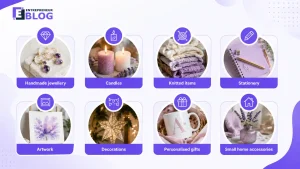
Students with creative skills can turn handmade products into a small business without needing a large commercial premises or complicated infrastructure.
Products could include:
- handmade jewellery;
- candles;
- knitted items;
- stationery;
- artwork;
- decorations;
- personalised gifts; and
- small home accessories.
The business can begin with a limited product range rather than dozens of different items. This makes it easier to understand which designs customers actually want before purchasing larger quantities of materials.
Students should calculate the complete cost of producing each item rather than looking only at raw materials.
Packaging, marketplace fees, payment-processing charges, postage, failed products and the student’s own time can all affect profitability.
Handmade Products Business Overview
| Factor | Typical Requirement |
| Estimated start-up cost | £50–£300 |
| Main equipment | Depends on the product being made |
| Main skills | Crafting, design and product presentation |
| Where it can operate | Home, markets and online |
| Typical customers | Gift buyers and niche audiences |
| Flexibility | High |
| Revenue model | Profit margin on individual products |
Product photography can make a substantial difference when items are sold online. Customers cannot inspect the product physically, so clear photographs, accurate descriptions and transparent delivery information are important.
Certain product categories may also be subject to additional safety, labelling or regulatory requirements.
Students should therefore check the applicable rules before selling products such as cosmetics, food, toys, candles or electrical goods.
The GOV.UK licence finder can help businesses identify whether particular activities require licences or permissions.
Starting with a small collection also reduces the risk of being left with large amounts of unsold inventory.
Best suited to: Creative students who already enjoy making physical products.
12. Dog Walking and Pet Sitting

Dog walking and pet sitting can provide students with a local business opportunity that is relatively simple to understand.
Pet owners may need help while they are working, travelling or dealing with other commitments.
Possible services include:
- individual dog walks;
- group walks;
- home visits;
- feeding pets;
- short-term pet sitting; and
- holiday care.
Students living close to residential neighbourhoods may find this particularly practical because travelling long distances between customers can quickly reduce profitability.
Dog Walking and Pet Sitting Overview
| Factor | Typical Requirement |
| Estimated start-up cost | £20–£200 |
| Main equipment | Leads, waste bags and basic pet-care equipment |
| Main skills | Reliability, confidence and animal care |
| Where it can operate | Local neighbourhoods |
| Typical customers | Pet owners |
| Flexibility | Medium to high |
| Revenue model | Per walk, visit, day or recurring package |
Trust is particularly important.
Customers may be giving the student responsibility for both an animal and access to their property. References, clear communication and appropriate insurance can therefore improve credibility.
Students should also consider how many animals they can safely handle at one time.
Taking too many dogs on a single walk simply to increase revenue can introduce unnecessary safety risks.
Local councils may impose rules governing commercial dog walking in particular parks or public spaces. These should be checked before operating regularly in those areas.
Weather, university holidays and examination periods should also be considered because customers may expect a consistent service throughout the year.
Best suited to: Responsible students who are comfortable caring for animals.
13. Cleaning and Home Organising
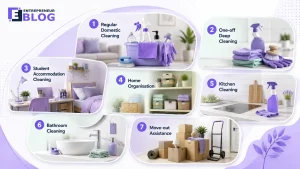
Cleaning can be one of the more straightforward local business ideas for students because the service is familiar and demand exists in most towns and cities.
Students might offer:
- regular domestic cleaning;
- one-off deep cleaning;
- student accommodation cleaning;
- home organisation;
- kitchen cleaning;
- bathroom cleaning; or
- move-out assistance.
Unlike many digital businesses, customers do not need to understand a complicated service before purchasing.
A clear list of tasks, transparent pricing and dependable arrival times can be enough to establish an initial customer base.
Cleaning Business Overview
| Factor | Typical Requirement |
| Estimated start-up cost | £30–£150 |
| Main equipment | Cleaning products and basic equipment |
| Main skills | Reliability, organisation and attention to detail |
| Where it can operate | Local homes and properties |
| Typical customers | Households, tenants and landlords |
| Flexibility | Medium |
| Revenue model | Hourly, per visit or regular contract |
Travel time should be included when determining whether a job is worthwhile.
A cleaning job that pays £35 may appear attractive, but the economics are considerably weaker if travelling to and from the property takes two hours.
Students may therefore benefit from concentrating on one neighbourhood or geographic area.
Clear agreements about what is included are also useful.
For example, window cleaning, oven cleaning, carpet cleaning or external areas could be treated as additional services rather than assumed to be part of the standard price.
Appropriate insurance should also be considered because the student may be working around customers’ possessions and inside private homes.
Best suited to: Reliable students who prefer practical work and local customers.
14. Language Conversation Lessons

Students who are fluent in more than one language can offer conversation sessions to people trying to improve their speaking confidence.
The service does not necessarily need to resemble formal classroom teaching.
Sessions might concentrate on:
- everyday conversation;
- pronunciation;
- vocabulary;
- interview preparation;
- travel language;
- workplace conversation; or
- speaking confidence.
Because lessons can take place through video calls, the business can operate from almost anywhere with a reliable internet connection.
Language Lessons Business Overview
| Factor | Typical Requirement |
| Estimated start-up cost | £0–£100 |
| Main equipment | Laptop, webcam and internet connection |
| Main skills | Language fluency and communication |
| Where it can operate | Fully online or locally |
| Typical customers | Adult learners, travellers and professionals |
| Flexibility | Very high |
| Revenue model | Per lesson or lesson package |
The service can become more attractive when aimed at a specific audience.
For example, a student might provide conversational Spanish for beginners rather than offering general language tuition to everybody.
Students should also describe their credentials accurately.
Speaking a language fluently does not automatically make somebody a qualified teacher, so they should not claim formal teaching credentials unless they genuinely possess them.
The strongest proposition may therefore be “conversation practice” rather than formal examination tuition.
Best suited to: Multilingual students who enjoy working directly with learners.
15. Selling Digital Products

Digital products can provide students with a business model that does not require physical inventory.
Possible products include:
- digital planners;
- spreadsheet templates;
- presentation templates;
- printable worksheets;
- revision resources;
- design assets;
- productivity templates; and
- original educational materials.
Once the product has been created, additional copies can often be supplied without recreating the complete item.
This gives digital products greater scalability than many hourly service businesses.
Digital Products Business Overview
| Factor | Typical Requirement |
| Estimated start-up cost | £0–£150 |
| Main equipment | Laptop and relevant software |
| Main skills | Design, organisation or specialist knowledge |
| Where it can operate | Fully online |
| Typical customers | Students, professionals and niche audiences |
| Flexibility | Very high |
| Revenue model | Individual sales, bundles or subscriptions |
Digital products should solve a specific problem rather than simply exist because they are easy to create.
A well-designed budgeting spreadsheet aimed at a particular type of freelancer, for example, may have a clearer purpose than a generic spreadsheet bundle.
Copyright also matters.
Students should ensure that images, typefaces, illustrations, templates and other assets included in their products are either original or properly licensed for commercial use.
Digital products should not be treated as guaranteed passive income. Customer support, updates, marketing and product improvements can still require substantial work.
Best suited to: Students with design, organisational or specialist knowledge.
16. Virtual Assistant Services

Virtual assistant work can be an accessible business for organised students who are comfortable handling administrative tasks.
Small business owners, consultants and freelancers often need help with routine work but may not require a full-time employee.
A student virtual assistant might provide:
- inbox organisation;
- appointment scheduling;
- spreadsheet updates;
- online research;
- document formatting;
- basic customer support;
- data entry; or
- simple administrative tasks.
The service can often be delivered remotely, making it suitable around university commitments.
Virtual Assistant Business Overview
| Factor | Typical Requirement |
| Estimated start-up cost | £0–£100 |
| Main equipment | Laptop and internet connection |
| Main skills | Organisation, communication and administration |
| Where it can operate | Fully online |
| Typical customers | Freelancers, consultants and SMEs |
| Flexibility | High |
| Revenue model | Hourly, project-based or monthly retainer |
Students should define the scope of their work carefully.
For example, bookkeeping, regulated financial services or specialist legal administration may require skills or qualifications beyond those of a general virtual assistant.
Data protection is another consideration because virtual assistants may handle customer information, emails or confidential documents.
Secure passwords, appropriate file-sharing practices and clear confidentiality arrangements are therefore important.
Best suited to: Highly organised students who are comfortable with administrative work.
17. CV and LinkedIn Profile Services

Students with strong writing and recruitment knowledge may be able to help job seekers improve CVs, cover letters and professional profiles.
Potential clients might include:
- university graduates;
- placement applicants;
- career changers;
- international job seekers; and
- professionals applying for new roles.
The service could involve improving structure, clarity and presentation rather than inventing achievements or qualifications.
CV Writing Business Overview
| Factor | Typical Requirement |
| Estimated start-up cost | £0–£100 |
| Main equipment | Laptop and word-processing software |
| Main skills | Writing, editing and recruitment awareness |
| Where it can operate | Fully online |
| Typical customers | Students, graduates and job seekers |
| Flexibility | High |
| Revenue model | Per document or package |
A student offering this service should never fabricate qualifications, employment history or professional experience for a client.
The objective should be to present genuine experience more clearly.
Packages might include a CV review, rewritten CV and LinkedIn profile optimisation.
Students could also specialise by sector, such as graduate technology applications or entry-level marketing roles.
A focused service can make it easier to develop repeatable templates and understand what employers in that sector expect.
Best suited to: Students with strong writing skills and an interest in recruitment or careers.
18. Campus Delivery and Errand Services
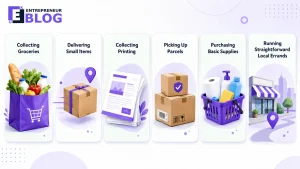
Students living in or around a university campus may be able to build a small local errand service.
Potential tasks might include:
- collecting groceries;
- delivering small items;
- collecting printing;
- picking up parcels;
- purchasing basic supplies; or
- running straightforward local errands.
This type of business depends heavily on convenience.
Customers are generally paying because completing the task themselves would take more time than they want to spend.
Campus Errand Business Overview
| Factor | Typical Requirement |
| Estimated start-up cost | £20–£150 |
| Main equipment | Bicycle, backpack or suitable transport |
| Main skills | Reliability, organisation and time management |
| Where it can operate | University and nearby neighbourhoods |
| Typical customers | Students and local residents |
| Flexibility | Medium |
| Revenue model | Per delivery or service fee |
Students should carefully calculate travel time and transport costs.
An errand that requires 45 minutes of travel cannot be priced in the same way as one completed within a few minutes.
Insurance requirements may also differ depending on whether bicycles, scooters or cars are used commercially.
Students should check the appropriate rules before using a vehicle for paid delivery work.
This type of business may work particularly well in a compact university area where several jobs can be completed close together.
Best suited to: Students who know their local area well and prefer active work.
19. Event Photography and Content Creation

Students can combine photography, video and social media skills into a specialised event-content business.
Potential customers include:
- university societies;
- student events;
- local restaurants;
- networking groups;
- small conferences;
- sports clubs; and
- independent businesses.
Instead of providing only professional photography, the student could create a combination of photographs and short vertical videos designed for social media.
Event Content Business Overview
| Factor | Typical Requirement |
| Estimated start-up cost | £100–£1,000+ |
| Main equipment | Smartphone or camera and editing software |
| Main skills | Photography, video and editing |
| Where it can operate | Local events |
| Typical customers | Societies, venues, businesses and organisers |
| Flexibility | Medium |
| Revenue model | Per event or content package |
A clearly defined package might include a two-hour event shoot, a collection of edited photographs and several short-form videos.
This provides customers with a more measurable deliverable than an open-ended promise to “create content”.
Students should obtain appropriate permission before using identifiable customer or event photographs for marketing purposes.
Equipment insurance may also be worth considering when expensive cameras or lenses are being used professionally.
Best suited to: Students interested in photography, video and social media.
20. Tech Support for Local Businesses

Students with strong computer skills can provide basic technology support to individuals and small businesses.
Possible services include:
- setting up computers;
- configuring email accounts;
- installing software;
- basic website updates;
- cloud-storage organisation;
- printer setup;
- device troubleshooting; and
- basic digital training.
Many small organisations need practical help with everyday technology but do not require a full managed IT service.
Student Tech Support Business Overview
| Factor | Typical Requirement |
| Estimated start-up cost | £0–£200 |
| Main equipment | Laptop and basic diagnostic tools |
| Main skills | Computer knowledge and problem-solving |
| Where it can operate | Online and locally |
| Typical customers | Individuals and small businesses |
| Flexibility | Medium to high |
| Revenue model | Hourly, per visit or support package |
Students should establish firm boundaries around the services they provide.
Cybersecurity, network administration and recovery of sensitive business data can involve significant responsibility and should not be offered without appropriate expertise.
Basic technical support can still provide considerable value.
For example, helping a small business organise cloud storage or configure everyday software may save the owner hours of frustration.
Students should also protect customer privacy when working with computers containing personal or confidential information.
Best suited to: Computing students and people with strong practical technology skills.
Which Business Idea Is Best for a Student?
There is no single best business idea for every student.
For somebody who wants to start with almost no money, tutoring, proofreading, writing, language lessons or social media management may be particularly accessible.
A design or computing student may be better placed to offer graphic design, video editing or website services because the work strengthens skills connected to their degree and future career.
Students wanting an offline business may prefer pet sitting, photography, cleaning or reselling.
The strongest option is normally one where three things overlap: the student already possesses a useful skill, customers have a genuine reason to pay for that skill, and the work can realistically fit around academic commitments.
How Much Does It Cost to Start a Student Business?
A student business does not necessarily need thousands of pounds of investment.
Several service businesses can be tested for less than £100 when the student already owns a suitable laptop or phone. Businesses involving specialist equipment, stock or professional insurance may require considerably more.
Instead of asking how much money is available to spend, a better question is how little needs to be spent to test whether customers actually want the product or service.
For example, someone considering a video-editing business could find one paying customer before purchasing premium equipment. A student interested in ecommerce could test a small number of products instead of ordering hundreds of units.
Keeping initial fixed costs low also makes it easier to stop or change direction if the idea does not work.
Do Students Have to Pay Tax on Business Income in the UK?
Students are not automatically exempt from tax because they are studying.
For eligible trading income, HMRC provides a trading allowance of up to £1,000 per tax year. Where gross trading income is more than £1,000, a person may need to register for Self Assessment and report the income. There are exceptions and circumstances where the allowance cannot be used, so individual circumstances should always be checked.
Anyone who becomes self-employed should also keep appropriate records of business income and expenses. HMRC says self-employed people completing Self Assessment generally need to retain relevant business records for at least five years after the 31 January submission deadline for the relevant tax year.
A student who needs to operate as a sole trader can check the official sole trader registration process through GOV.UK.
If a business grows substantially, VAT may eventually become relevant. As of August 2026, compulsory VAT registration generally applies when taxable turnover exceeds £90,000, subject to the detailed rules and exceptions.
Tax treatment depends on total income, allowable expenses, employment income and other individual circumstances. Students unsure about their position should check HMRC guidance or obtain advice from an appropriately qualified tax adviser.
Should a Student Register as a Sole Trader or Limited Company?
Many small student businesses begin with a relatively simple self-employed or sole trader structure where this is legally permitted, but that does not mean a sole trader is automatically the right structure in every situation.
A limited company creates a legally separate entity and comes with additional accounting, filing and administrative responsibilities.
The appropriate structure depends on commercial risk, expected income, ownership arrangements, tax circumstances, investment plans and the nature of the activity.
Students should therefore avoid forming a company simply because they believe having “Ltd” in the name makes the business appear more professional.
For a small idea that is still being validated, unnecessary administration can distract from the more important question: will customers actually pay?
How Can Students Find Their First Customers?
The first customers often come from a much smaller market than new founders expect.
A tutor might begin by reaching local parents. A photographer could work with university societies. A designer might approach nearby independent businesses. A video editor could contact creators producing content regularly but editing inconsistently.
The goal should be to identify a specific customer with a recognisable problem.
“Social media services for everyone” is difficult to market. “Short-form video editing for independent gyms” gives the business a clearer audience, service and sales message.
Early customers are also valuable sources of information. Their questions, objections and reasons for purchasing can show the student how the offer should change.
What Should Students Check Before Starting?
Before accepting money, a student should understand exactly what is being sold, what it costs to deliver, who the customer is and whether any tax, immigration, insurance, licensing, consumer-protection or data-protection requirements apply.
The business should also have a simple system for recording payments and expenses from the beginning.
Where customers are buying goods or services online, UK consumer-protection requirements can apply. Businesses should provide accurate information about products, prices and terms and handle customers fairly. Current guidance is available from the Competition and Markets Authority.
Students should be particularly cautious about business models requiring large upfront payments, expensive courses, substantial inventory purchases or long-term contracts before demand has been demonstrated.
What Makes a Good Student Business?
A good student business is usually flexible, inexpensive to test and simple enough to operate alongside university commitments.
It should solve a real customer problem rather than exist merely because the idea appears popular on social media.
Students should also calculate profitability based on time, not revenue alone.
Suppose a service produces £80 of revenue but requires six hours of work, two hours of travelling and £20 of expenses. The economics are very different from a £70 service that takes two hours and costs almost nothing to provide.
That type of calculation helps identify which activities are genuinely worth continuing.
Conclusion
The best business ideas for students are those that match existing skills, fit around academic commitments and can be tested without large upfront costs.
From tutoring and freelance services to digital products, reselling and local support businesses, students have plenty of realistic options.
Starting small, tracking income and expenses, understanding legal responsibilities and focusing on genuine customer needs can make the process more manageable.
A simple idea with consistent execution can provide valuable experience alongside potential extra income.
Frequently Asked Questions
What is the easiest business for a student to start?
Service businesses such as tutoring, proofreading, freelance writing, social media management and language conversation lessons can be among the easiest because they require relatively little equipment or stock.
What business can a student start with £100?
Several businesses can potentially be tested with £100 or less, including tutoring, writing, digital products, social media management, proofreading and some local service businesses. Actual costs depend on equipment and insurance requirements.
Can students run a business while studying full-time?
UK students can generally operate a business while studying, provided they meet applicable tax, regulatory and contractual requirements. However, students subject to immigration restrictions must check their visa conditions first.
Student visa holders are generally prohibited from self-employment and business activity.
Does a student need to register with HMRC immediately?
Not necessarily. Registration requirements depend on the student’s circumstances and trading income. Gross trading income above the £1,000 trading allowance can mean Self Assessment registration is required, subject to the detailed HMRC rules.
Can students sell products online?
Yes, where their immigration status permits business activity. Commercial sellers should understand tax, consumer rights, intellectual-property requirements and any product-specific regulations that apply.
Is online tutoring a good business for students?
It can be. Tutoring offers flexible working hours, relatively low start-up costs and the opportunity to monetise existing subject knowledge. Demand and rates vary according to subject, level, location and experience.
Which student businesses can be run from home?
Tutoring, freelance writing, proofreading, graphic design, video editing, social media management, website services, language lessons and many digital-product businesses can largely be operated remotely.
Should a student borrow money to start a business?
Borrowing is not automatically necessary or appropriate. Many student business ideas can be tested with limited capital. Any borrowing decision should take account of repayment obligations, interest, cash flow and the risk that the business generates less revenue than expected.