

The best business credit cards in UK for 2026 depend on how a company spends and manages repayments. Capital on Tap is a strong all-round option because of its no annual fee and straightforward cashback, while Funding Circle stands out for introductory cashback.
American Express Business Gold suits rewards and travel-focused businesses, whereas NatWest Business Plus can offer better value for firms spending heavily on fuel, EV charging and trade supplies.
- Overall Best: Capital On Tap Business Credit Card
- Best For Cashback: Funding Circle Cashback Business Credit Card
- Best For Rewards And Travel: American Express Business Gold
- Best For Fuel And Trade Spending: NatWest Business Plus
- Best For Overseas Spending: Santander Business Cashback Credit Card
- Best For Long Interest-Free Period: Virgin Money Business Credit Card
- Best For Low Annual Cost: Metro Bank Business Credit Card
- Best For Employee Expense Management: Moss Corporate Card
Last Updated: 09.09.2026
Which Business Credit Card Is Right For Your Business?
Some of the strongest business credit cards in UK for 2026 include Capital on Tap for straightforward cashback, Funding Circle for its introductory cashback offer, American Express Business Gold for rewards and business travel, and Virgin Money for businesses wanting a long interest-free window.
Established companies that already bank with major UK providers can also consider HSBC, Lloyds, Santander, NatWest, RBS and Metro Bank.
There is no universal best card. The right choice depends on:
- Annual Spending
- Whether You Repay In Full Each Month
- Cashback And Reward Preferences
- Overseas Spending
- Number Of Employee Cards Required
- Existing Business Bank Account
- Company Structure
- Trading History
- Credit Profile
Businesses that regularly carry a balance should pay particular attention to interest rates because interest charges can quickly outweigh cashback or reward benefits.
How Should You Choose A Business Credit Card?
Start with how the card will actually be used rather than choosing the highest advertised cashback rate.
A business paying its balance in full each month can focus more heavily on rewards, cashback and annual fees. A company expecting to carry debt should prioritise the purchase rate and repayment flexibility instead.
Consider these areas:
- APR: Important if you expect to carry a balance
- Annual Fee: Calculate whether rewards will exceed the cost
- Cashback: Check qualifying spending and minimum spend requirements
- Foreign Fees: Important for overseas travel and international suppliers
- Interest-Free Period: Useful for short-term cash flow
- Eligibility: Check company type, trading history and account requirements
- Employee Cards: Useful for growing teams
- Expense Controls: Look for individual limits and real-time monitoring
- Accounting Integration: Helpful for bookkeeping and reconciliation
A card advertising 1% cashback may still deliver poor value if the business pays high interest or foreign transaction fees.
Top Business Credit Cards In UK For 2026
1. American Express Business Gold Card

The American Express Business Gold Card is aimed at limited companies and LLPs that want rewards, employee cards and more flexibility over business spending.
Cardholders generally earn one Membership Rewards point for every eligible £1 spent and two points per £1 on eligible American Express Travel purchases. Businesses can also have up to 20 complimentary employee cards.
The annual fee is currently waived during the first year and is £195 from the second year. Purchases can receive up to 54 days interest-free when the balance is repaid according to the terms.
An important change arrived on 28 January 2026.
New Business Gold applications now include a Flexible Payment Option, allowing qualifying businesses to carry part of their balance rather than automatically paying everything in full. The purchase rate for balances using the credit facility is currently 29.1% p.a. variable.
Pros
- Strong Membership Rewards Programme
- Up To 54 Days Interest-Free
- Up To 20 Complimentary Employee Cards
- Useful Travel Benefits
- No Annual Fee In The First Year
Cons
- £195 Annual Fee After The First Year
- Available To LTD And LLP Businesses
- Interest Can Reduce The Value Of Rewards
- Foreign Transaction Charges Can Apply
Best For: Businesses with substantial card spending that can make good use of rewards and travel benefits.
2. Capital On Tap Business Credit Card

Capital on Tap is one of the strongest straightforward cashback options for eligible UK limited companies and LLPs.
Its standard card currently provides unlimited 1% cashback on card spending with no annual fee. There are also no foreign exchange or ATM fees, and businesses can receive credit limits of up to £250,000 depending on their circumstances.
Capital on Tap also provides unlimited free employee cards and allows rewards to be redeemed as cashback, against the account balance or converted into selected loyalty programmes.
Rates currently start from 13.86% APR variable, although the actual rate depends on the applicant. The card provides up to 42 days interest-free when the balance is cleared on time.
A useful eligibility change is that Capital on Tap no longer states a minimum trading-history requirement. Eligible newly formed companies may therefore apply, although approval still depends on credit and other lending criteria.
Pros
- 1% Uncapped Cashback
- No Annual Fee
- No Foreign Exchange Fee
- Unlimited Free Employee Cards
- No Minimum Trading History Stated
Cons
- Sole Traders Are Not Eligible
- Approval Depends On Business And Director Circumstances
- Interest Applies When Balances Are Carried
Best For: SMEs wanting simple cashback without an annual fee.
3. Funding Circle Cashback Business Credit Card
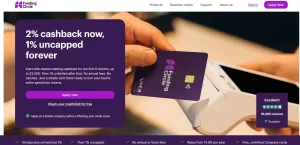
Funding Circle has become a particularly competitive option in 2026.
Its Cashback Business Credit Card currently offers 2% cashback during the first six months, capped at £2,000, followed by 1% uncapped cashback.
There is no monthly or annual fee and no foreign exchange fee. Eligible businesses can receive credit limits of up to £250,000 and up to 42 days interest-free.
Rates start from 14.9% per year, with a representative APR of 34.9% variable. Funding Circle also supports Sage, Xero and FreeAgent integrations.
Eligibility for the Cashback card currently requires the business to be a UK limited company with at least one year of trading history and annual turnover of at least £30,000.
Pros
- 2% Introductory Cashback
- 1% Uncapped Cashback Afterwards
- No Annual Fee
- No Foreign Exchange Fee
- Accounting Software Integration
- Unlimited Company Cards Available
Cons
- Introductory 2% Rate Is Temporary And Capped
- Limited Company Requirement
- Trading History And Turnover Requirements Apply
- Representative APR Is High If A Balance Is Carried
Best For: Established limited companies seeking strong cashback on regular spending.
4. HSBC Commercial Card
The HSBC Commercial Card provides a relatively traditional business credit card designed around cash flow rather than large reward programmes.
It currently offers up to 56 days interest-free credit and has a 22% representative APR variable. The annual fee is waived during the first year and is £32 per card from the second year.
Applicants need an HSBC Business Current Account.
The card also supports employee cards, mobile payments and business expense management through HSBC’s digital banking services.
Pros
- Up To 56 Days Interest-Free
- No Annual Fee During The First Year
- Employee Cards Available
- Established High-Street Provider
Cons
- HSBC Business Current Account Required
- £32 Annual Fee Per Card After The First Year
- Limited Cashback Compared With Specialist Cards
Best For: Existing HSBC business customers prioritising cash-flow flexibility.
5. NatWest Business Plus Credit Card

NatWest Business Plus is particularly attractive to businesses with significant fuel, EV charging, travel or trade-related expenditure.
The card currently pays:
- 3% Cashback On Eligible Fuel And EV Charging
- 2% Cashback On Eligible Trade And Business Supplies
- 1% Cashback On Eligible Travel And Accommodation
- 5% Cashback On Other Eligible Purchases
Cashback is capped at £600 per account each year.
The annual fee is £70 per cardholder. The representative APR is currently 29% variable, based partly on the annual fee, while the purchase rate is 13.9% p.a. variable. Applicants must maintain a NatWest business bank account in the same legal entity name.
Pros
- Excellent Cashback On Fuel And EV Charging
- Strong Cashback For Trade Spending
- No Foreign Purchase Transaction Fee
- Expense Management Through ClearSpend
Cons
- £70 Annual Fee Per Card
- Existing NatWest Business Account Required
- Cashback Capped At £600 Per Year
Best For: Fleet, construction and trade businesses with predictable category spending.
6. Barclaycard Select Cashback Business Credit Card
Barclaycard Select Cashback provides a simple cashback structure with no annual fee.
Businesses can earn 1% cashback on eligible spending when total eligible spending reaches at least £2,000 during the statement month.
The card currently has a 25.5% representative APR variable and offers up to 56 days interest-free on purchases when the balance is cleared in full and on time.
It also includes purchase protection and cardholder misuse insurance, subject to policy terms.
Pros
- No Annual Fee
- 1% Cashback
- Up To 56 Days Interest-Free
- Purchase Protection
- Cardholder Misuse Insurance
Cons
- £2,000 Monthly Spending Requirement For Cashback
- 5% Representative APR
- Less Attractive For Low-Spending Businesses
Best For: Businesses regularly spending more than £2,000 each month.
7. Lloyds Bank Business Credit Card
Lloyds offers cashback geared towards fuel and everyday operational spending.
Businesses currently receive 1% cashback on eligible fuel and EV charging and 0.5% on other qualifying purchases when they meet the £2,000 monthly spending threshold.
The card offers up to 56 days interest-free and a typical representative APR of 15.95% variable.
There is no annual fee during the first 12 months. After that, the fee is £32 per cardholder unless annual spending across the cards reaches at least £6,000. Applicants must already have a Lloyds Business Current Account.
Pros
- Competitive Representative APR
- Fuel And EV Cashback
- Up To 56 Days Interest-Free
- Annual Fee Can Be Avoided Through Spending
Cons
- Existing Lloyds Business Account Required
- £2,000 Monthly Spend Needed For Cashback
- Foreign Transaction Fees Apply
Best For: Existing Lloyds customers with regular fuel and operating expenses.
8. Santander Business Cashback Credit Card
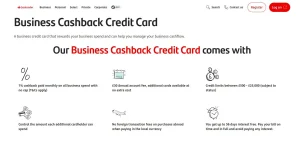
Santander’s Business Cashback Credit Card is particularly useful for businesses making purchases abroad.
It currently pays 1% cashback on eligible business spending without a cashback cap and charges a £30 annual account fee.
There are no foreign transaction fees on qualifying purchases abroad when paying in local currency. Businesses can also receive up to 56 days interest-free and add extra cards without an additional card fee.
Santander currently quotes a representative APR of 23.7% variable. Applicants must already hold a Santander Business Current Account.
Pros
- 1% Cashback
- No Cashback Cap
- No Foreign Purchase Transaction Fee
- Additional Cards Available
- Up To 56 Days Interest-Free
Cons
- £30 Annual Fee
- Santander Business Current Account Required
Best For: Existing Santander customers that regularly spend internationally.
9. Virgin Money Business Credit Card

Virgin Money combines cashback with one of the longest interest-free purchase periods among mainstream business cards.
Businesses can currently earn 1% cashback on eligible spending without a cap and receive up to 59 days interest-free when the statement balance is paid in full and on time.
There is no annual fee during the first year. The fee is £28 per card from year two.
The representative APR is currently 27.7% variable. A 2.95% non-sterling transaction fee applies in many circumstances, although exemptions exist for certain currencies and locations.
Not every purchase earns cashback. Exclusions include tax payments, gambling, cryptocurrency, debt repayments and certain financial transactions.
Pros
- 1% Uncapped Cashback
- Up To 59 Days Interest-Free
- No First-Year Annual Fee
- Relatively Low Year-Two Fee
Cons
- Cashback Exclusions Apply
- Foreign Transaction Fees Can Apply
- Interest Can Quickly Offset Rewards
Best For: Businesses that clear balances monthly and value a longer payment window.
10. Metro Bank Business Credit Card
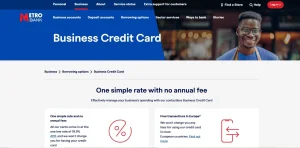
Metro Bank takes a simpler approach.
Its Business Credit Card currently charges no annual fee and has a representative APR of 18.9% variable.
Businesses can receive up to 56 days interest-free on purchases when the balance is repaid in full and on time.
Metro Bank does not charge transaction fees for card spending in most European countries, although fees can apply elsewhere.
Applicants must hold a Metro Bank Business Current Account or Commercial Current Account. The card operates on the Mastercard network.
Pros
- No Annual Fee
- 9% Representative APR
- Up To 56 Days Interest-Free
- No Card Transaction Fees Across Much Of Europe
Cons
- No Standard Cashback Programme
- Metro Bank Current Account Required
- Overseas Fees Can Apply Outside Europe
Best For: Businesses that prefer low ongoing card costs over rewards.
11. RBS Business Plus Credit Card

RBS Business Plus largely mirrors the NatWest Business Plus proposition and is aimed primarily at businesses already banking with Royal Bank of Scotland.
The card offers:
- 3% Cashback On Eligible Fuel And EV Charging
- 2% Cashback On Eligible Trade And Business Supplies
- 1% Cashback On Eligible Travel And Accommodation
- 5% Cashback On Other Eligible Purchases
Cashback is capped at £600 per account annually.
The card costs £70 per cardholder. Its representative APR is currently 29% variable and its purchase rate is 13.9% p.a. variable.
Pros
- Strong Fuel And EV Cashback
- Valuable Trade Spending Cashback
- No Foreign Purchase Transaction Fees
- Up To 56 Days Interest-Free
Cons
- £70 Annual Fee Per Cardholder
- Existing RBS Business Account Required
- Cashback Cap Applies
Best For: Existing RBS customers with high fuel, travel or trade spending.
12. Moss Corporate Card

Moss is different from most cards on this list because its main strength is company-wide spend management rather than traditional revolving borrowing.
Businesses can create unlimited virtual cards, set individual transaction limits, restrict merchant categories and automate receipt collection.
Moss Credit currently offers 0% interest where balances are repaid according to the agreed billing cycle. Accounting integrations and automated expense categorisation make it particularly suitable for finance teams managing multiple employees.
Pricing depends on the package and modules selected. Cashback may also be available to customers with higher transaction volumes rather than being offered at one standard rate to every customer.
Pros
- Unlimited Virtual Cards
- Detailed Spending Controls
- Automated Receipt Collection
- Accounting And ERP Integrations
- Useful For Larger Teams
Cons
- Not A Direct Replacement For Every Traditional Credit Card
- Pricing Is Package-Based
- Cashback Is Not A Universal Fixed Rate
Best For: Growing companies prioritising expense management and employee spending controls.
Business Credit Cards In UK Comparison For 2026
Comparing business credit cards in UK side by side makes it easier to assess fees, cashback, interest-free periods and key benefits. The best option depends on whether you prioritise rewards, overseas spending, employee expenses or short-term credit.
| Provider | Best For | Annual Fee | Cashback Or Rewards | Interest-Free Period |
| American Express Business Gold | Rewards And Travel | £0 First Year, Then £195 | Membership Rewards Points | Up To 54 Days |
| Capital On Tap | Everyday Cashback | £0 | 1% Uncapped Cashback | Up To 42 Days |
| Funding Circle Cashback | Introductory Cashback | £0 | 2% First 6 Months, Then 1% | Up To 42 Days |
| HSBC Commercial Card | Established Businesses | £0 First Year, Then £32 Per Card | Limited Rewards | Up To 56 Days |
| NatWest Business Plus | Fuel And Trade Spending | £70 Per Card | Up To 3% Cashback | Up To 56 Days |
| Barclaycard Select Cashback | Higher Monthly Spending | £0 | 1% Cashback Subject To Spend | Up To 56 Days |
| Lloyds Business Credit Card | Fuel And Everyday Spending | £0 First Year | Up To 1% Cashback | Up To 56 Days |
| Santander Business Cashback | Overseas Spending | £30 | 1% Cashback | Up To 56 Days |
| Virgin Money Business Credit Card | Longer Payment Window | £0 First Year, Then £28 | 1% Cashback | Up To 59 Days |
| Metro Bank Business Credit Card | Low-Cost Card Use | £0 | No Standard Cashback | Up To 56 Days |
| RBS Business Plus | Fuel And Trade Businesses | £70 Per Card | Up To 3% Cashback | Up To 56 Days |
| Moss Corporate Card | Employee Expense Management | Custom Pricing | Variable | Billing Cycle Based |
Capital on Tap and Funding Circle are strong cashback options, while American Express suits rewards-focused businesses. NatWest and RBS stand out for fuel and trade spending, while Santander may be more suitable for international purchases.
What Changed With Business Credit Cards In 2026?
Several notable changes have affected the UK market.
American Express changed the structure of its Business Gold product from 28 January 2026. New customers now receive the Flexible Payment Option, allowing eligible balances to be carried with interest rather than operating purely as a traditional charge card.
Funding Circle has also strengthened its position in the cashback market by offering 2% cashback for the first six months, up to £2,000, followed by 1% uncapped cashback.
Capital on Tap’s current eligibility criteria no longer specify a minimum trading history, making it potentially accessible to some newly incorporated businesses.
The broader trend is towards cards combining credit with expense-management tools, employee spending controls and accounting software integrations rather than providing borrowing alone.
Who Can Get A Business Credit Card In The UK?
Eligibility differs substantially between providers.
Lenders commonly consider:
- Company Structure
- Trading History
- Annual Turnover
- Business Credit History
- Director Credit History
- Existing Debt
- County Court Judgments
- Industry
- Business Bank Account
- Applicant Residency
Can Sole Traders Get A Business Credit Card?
Yes, but the choice is narrower.
Some traditional banks accept sole traders when they already hold an eligible business bank account. Other providers restrict applications to limited companies and LLPs.
Capital on Tap, for example, does not currently accept sole traders, while Lloyds states that sole traders can apply if they meet its account and lending requirements.
Can Startups And New Companies Get A Business Credit Card?
Some can.
A startup without several years of accounts may still qualify with providers that do not impose a minimum trading period. However, directors may face closer personal and business credit assessment.
Companies should avoid submitting several applications simultaneously because multiple credit searches can make future borrowing harder.
Business Credit Card Eligibility Compared
| Provider | Main Company Types | Existing Account Required | Notable Requirement |
| American Express Gold | LTD And LLP | UK Bank Account Required | Minimum Personal Income Criteria |
| Capital On Tap | LTD, LLP And Eligible PLCs | No Provider Bank Account Required | No Minimum Trading History Stated |
| Funding Circle Cashback | Limited Company | No | 1 Year Trading And £30,000 Turnover |
| HSBC | Eligible Business Customers | HSBC Business Account | Credit Assessment |
| NatWest Business Plus | UK Businesses | NatWest Business Account | Subject To Status |
| Barclaycard Select | Eligible Businesses | Varies | Credit Assessment |
| Lloyds | Sole Traders, Partners And Companies | Lloyds Business Account | Subject To Credit Assessment |
| Santander | Eligible Business Customers | Santander Business Account | UK-Based Business |
| Virgin Money | Eligible Business Customers | Provider Requirements Apply | Credit Assessment |
| Metro Bank | Eligible Businesses | Metro Bank Business Account | Subject To Status |
| RBS Business Plus | UK Businesses | RBS Business Account | Subject To Status |
| Moss | Companies | Existing Business Bank Connection | KYC And Credit Assessment |
Eligibility rules can change independently of advertised rates and fees.
What Fees Do Business Credit Cards Charge?
The headline annual fee is only one part of the cost.
Businesses should also check:
- Purchase Interest
- Cash Withdrawal Charges
- Foreign Transaction Fees
- Late Payment Fees
- Returned Payment Charges
- Employee Card Fees
- Balance Transfer Fees
- Money Transfer Fees
A no-fee cashback card can be excellent value when cleared monthly but expensive when balances are carried for long periods.
For example, earning £500 of annual cashback provides little benefit if the same business pays £1,000 in interest.
Businesses should therefore compare the likely total cost based on their own repayment behaviour rather than ranking cards solely by cashback.
Do Business Credit Cards Affect Your Personal Credit Score?
They can.
Business lenders may check both the company and the individual director, particularly where the business is small, newly incorporated or dependent on a small number of owners.
Some applications use soft searches initially, while others can involve hard credit searches.
A provider may also require a personal guarantee. This can make a director personally responsible for some or all of the debt if the company does not repay it.
Limited-company status therefore does not automatically mean the director has no personal financial exposure.
Before signing an agreement, check:
- Whether A Personal Guarantee Is Required
- What Amount The Guarantee Covers
- Whether Interest And Fees Are Included
- When The Provider Can Enforce It
- Whether It Continues After The Card Is Closed
Do Business Credit Cards Have Section 75 Protection?
Businesses should not assume that ordinary Section 75 protection applies to every business credit card transaction.
Section 75 of the Consumer Credit Act primarily protects qualifying consumer credit purchases. A credit card issued directly to a limited company will generally not provide the same statutory consumer protection.
Some business borrowing involving individuals, sole traders or small partnerships may fall under different regulatory arrangements depending on the agreement.
The Financial Ombudsman explains that Section 75 can make a card provider jointly liable with a supplier for qualifying consumer purchases where the necessary legal relationship exists.
Business card providers may instead offer:
- Chargeback
- Purchase Insurance
- Fraud Protection
- Cardholder Misuse Insurance
For example, Barclaycard Select Cashback advertises both purchase protection and cardholder misuse insurance.
Businesses should check the specific protection offered by the card rather than assuming personal credit-card rules apply.
Business Credit Card Vs Business Loan
Both provide access to borrowing, but they serve different purposes.
| Feature | Business Credit Card | Business Loan |
| Best Use | Short-Term And Recurring Spending | Larger Planned Investment |
| Borrowing | Reusable Credit Limit | Fixed Lump Sum |
| Repayment | Flexible Monthly Payments | Fixed Instalments |
| Interest | Usually Higher | Often Lower |
| Rewards | Sometimes Available | Usually None |
| Employee Spending | Often Supported | Not Applicable |
| Long-Term Borrowing | Usually Less Suitable | Often Better Suited |
A credit card can work well for advertising, stock, travel, subscriptions and temporary working-capital gaps.
Loans are generally more appropriate for major equipment, premises improvements or longer-term investment where the cost needs to be spread over several years.
How Do You Apply For A Business Credit Card In The UK?
Applications can often be completed online, although some banks require applicants to be existing customers.
Businesses will commonly need:
- Business Name
- Registered Address
- Companies House Details
- Trading Address
- Turnover
- Expected Card Spending
- Director Information
- Business Bank Details
- Trading History
The lender may then assess both business and personal credit information.
Before applying, check the provider’s eligibility requirements carefully. Avoid applying for several cards simply to see which one accepts you.
If an application is declined, review the reason where available. Check business credit reports, director credit reports, Companies House records and outstanding CCJs before applying elsewhere.
Are Business Credit Cards Worth It?
They can be valuable when used for the right purpose.
A well-managed card can:
- Improve Short-Term Cash Flow
- Separate Personal And Business Spending
- Simplify Bookkeeping
- Earn Cashback
- Provide Travel Rewards
- Control Employee Spending
- Build A Business Credit History
The main risk comes from treating the credit limit as additional income.
Carrying substantial balances can make rewards irrelevant because interest costs are usually much larger than cashback rates.
Business owners should therefore only borrow amounts they can realistically repay.
Business credit cards can also be used for certain tax payments. HMRC accepts corporate credit cards for payments including VAT, PAYE, Corporation Tax and Self Assessment, although a non-refundable card fee applies. Personal credit cards cannot be used for these payments.
Check whether your card provider treats tax payments as eligible cashback spending before using the card purely to earn rewards.
Conclusion
The best business credit cards in UK for 2026 depend more on how a company spends than on which provider advertises the biggest headline reward.
Capital on Tap remains attractive for simple, fee-free cashback, while Funding Circle offers a particularly strong introductory cashback rate. American Express Business Gold suits businesses that value reward points and travel benefits.
NatWest and RBS Business Plus can produce strong returns for businesses spending heavily on fuel, EV charging and trade supplies. Santander is worth considering for international purchases, while Virgin Money offers one of the longest interest-free purchase periods among the cards compared.
Businesses should compare annual fees, APRs, cashback exclusions, foreign transaction charges and eligibility before applying. Most importantly, companies that routinely carry balances should prioritise borrowing costs over rewards.
FAQs About Business Credit Cards In UK
What Is The Easiest Business Credit Card To Get In The UK?
There is no guaranteed easiest card. Eligibility depends on company structure, credit history, turnover and the lender’s criteria. Providers without minimum trading-history requirements may be more accessible to some newer businesses.
Can I Use A Personal Credit Card For Business Expenses?
It may be possible, particularly for sole traders, but a dedicated business card makes accounting easier and keeps personal and company spending separate. Limited-company owners should also maintain clear financial separation.
Can I Pay HMRC With A Business Credit Card?
Yes. HMRC accepts corporate credit cards for several taxes, including Corporation Tax, VAT, PAYE and Self Assessment. A non-refundable card fee applies.
Are Business Credit Card Rewards Taxable In The UK?
Tax treatment can depend on how rewards are earned and used. Businesses with substantial cashback or employee reward arrangements should confirm the accounting treatment with their accountant or tax adviser.
Do Business Credit Cards Build Business Credit?
Responsible borrowing and repayment can contribute to a company’s credit history where the provider reports account activity to commercial credit-reference agencies.
Can A Business Credit Card Affect My Personal Credit?
Yes. Providers may check a director’s personal credit profile and some cards require personal guarantees. Missed payments may therefore have wider consequences depending on the agreement.
How Many Business Credit Cards Can A Company Have?
There is no universal limit. A business can potentially hold several cards, but each provider will assess existing borrowing, affordability and credit exposure before approving additional credit.